Hydrochloric Acid → 2,4-Dichloro-6-(2,4-dimethylphenyl)-1,3,5-triazine
Reaction equation

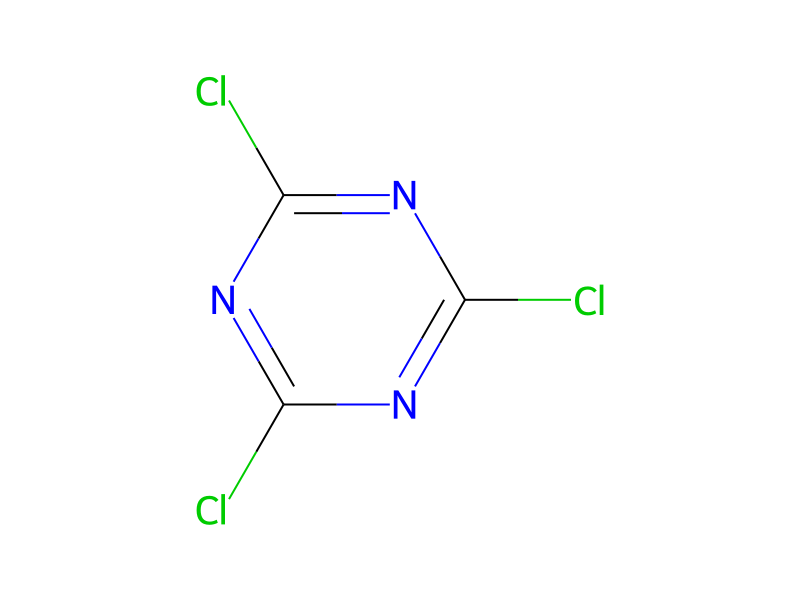
II.Br[C:4]1[CH:9]=[CH:8][C:7]([CH3:10])=[CH:6][C:5]=1[CH3:11].[N:12]1[C:19]([Cl:20])=[N:18][C:16](Cl)=[N:15][C:13]=1[Cl:14].Cl>C1COCC1.C1(C)C=CC=CC=1>[Cl:14][C:13]1[N:12]=[C:19]([Cl:20])[N:18]=[C:16]([C:4]2[CH:9]=[CH:8][C:7]([CH3:10])=[CH:6][C:5]=2[CH3:11])[N:15]=1Participants






Procedure
17.0 g (0.70 mol) of iodine-activated magnesium turnings in 25 ml of anhydrous THF are heated briefly to 60° C. Then 154.9 g (0.70 mol) of 4-bromo-m-xylene (in c. 90% purity) and 155 ml of THF are added dropwise over 30 min and the mixture is heated for 2 hours to reflux. After cooling, the Grignard solution is added over 1.5 hours to a mixture of 43.0 g (0.233 mol) of cyanuric chloride and 150 ml of THF, while keeping the temperature of the mixture in the range from 0° to 10° C. The mixture is then diluted with 210 ml of toluene, the resultant suspension is poured into 220 g of 12% aqueous HCl, the organic phase is separated, washed with a total amount of 280 g of water and concentrated. The resultant material is recrystallised from 2-butanol, giving the title compound with a melting point of 135.5°-137° C. in a yield of 79.8%.
Workup
- temperaturethe mixture is heated for 2 hours
- temperatureto reflux
- temperatureAfter cooling
- customfrom 0° to 10° C
- customthe organic phase is separated
- washwashed with a total amount of 280 g of water
- concentrationconcentrated
- customThe resultant material is recrystallised from 2-butanol
Sources & evidence
- ORD record
- ord-7928157bbaba4649b60890a7d5a46542
- Source dataset
- uspto-grants-1995_08
- Patent number
- US05438138
Reaction notes
Loading…