Hydrochloric Acid → 3-(3,4-Dihydroxy-5-nitrophenyl)-1-(4-methylphenyl)prop-2-en-1-one
Reaction equation

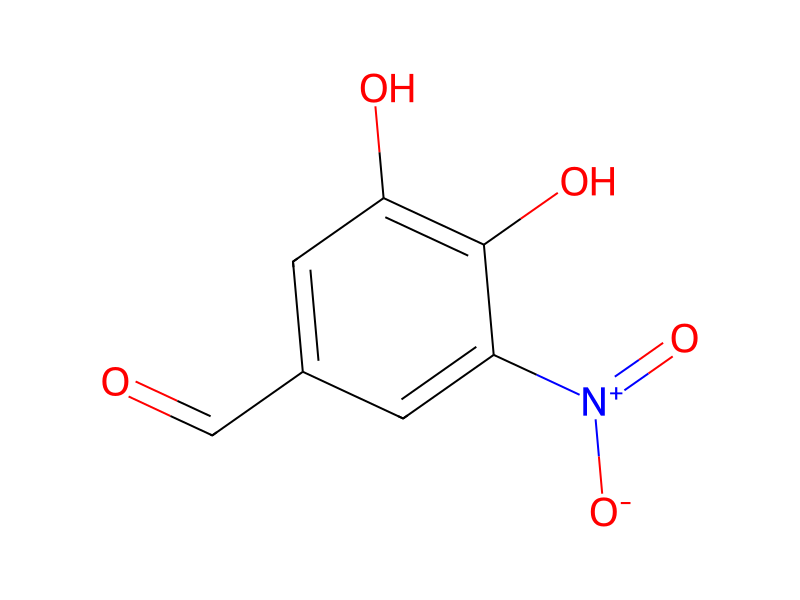
[OH:1][C:2]1[CH:3]=[C:4]([CH:7]=[C:8]([N+:11]([O-:13])=[O:12])[C:9]=1[OH:10])[CH:5]=O.[CH3:14][C:15]1[CH:20]=[CH:19][C:18]([C:21](=[O:23])[CH3:22])=[CH:17][CH:16]=1.Cl>O1CCCC1>[OH:1][C:2]1[CH:3]=[C:4]([CH:5]=[CH:22][C:21]([C:18]2[CH:19]=[CH:20][C:15]([CH3:14])=[CH:16][CH:17]=2)=[O:23])[CH:7]=[C:8]([N+:11]([O-:13])=[O:12])[C:9]=1[OH:10]Participants
5




Procedure
A solution containing 5.49 g of 3,4-dihydroxy-5-nitrobenzaldehyde and 5.37 g of 4'-methylacetophenone in 50 ml of tetrahydrofuran was added a catalytic amount of gaseous hydrogen chloride and refluxed for 4.5 h. The solvent was evaporated in vacuo and the residue crystallized from ether-petroleum-ether, yield 1.85 g (21%), m.p. 184°-186° C.
Workup
- temperaturerefluxed for 4.5 h
- customThe solvent was evaporated in vacuo
- customthe residue crystallized from ether-petroleum-ether, yield 1.85 g (21%), m.p. 184°-186° C.
Sources & evidence
- ORD record
- ord-d7354389ccbc42029b7acb783399c079
- Source dataset
- uspto-grants-1995_08
- Patent number
- US05446194
Reaction notes
Loading…