Benzoic Acid → Benzoyl chloride
Reaction equation

C1(C(=CC(=C(C=1)C)C)C)C.[C:11]([C:19]#[N:20])(=[O:18])[C:12]1[CH:17]=[CH:16][CH:15]=[CH:14][CH:13]=1.C(O)(=O)C1C=CC=CC=1.[Cl:30]C1C=CC=CC=1>>[C:11]([Cl:30])(=[O:18])[C:12]1[CH:17]=[CH:16][CH:15]=[CH:14][CH:13]=1.[C:11]([C:19]#[N:20])(=[O:18])[C:12]1[CH:17]=[CH:16][CH:15]=[CH:14][CH:13]=1Participants
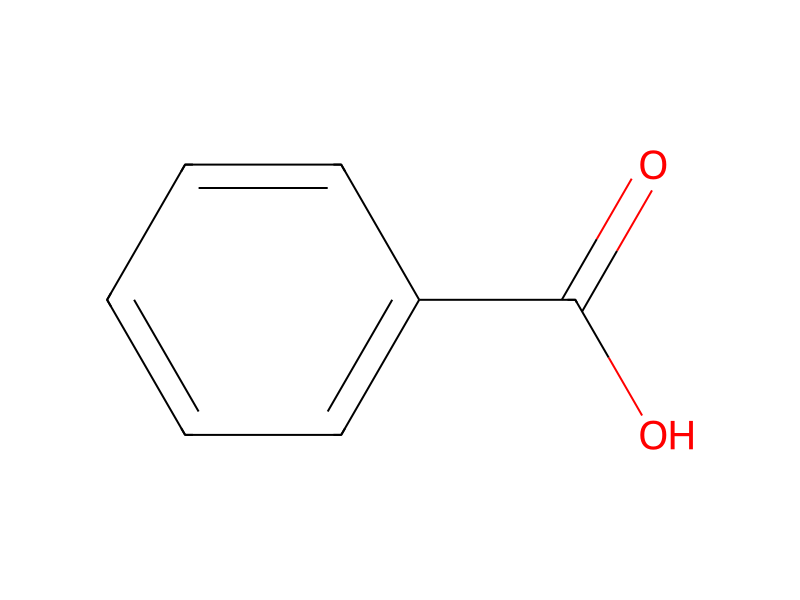
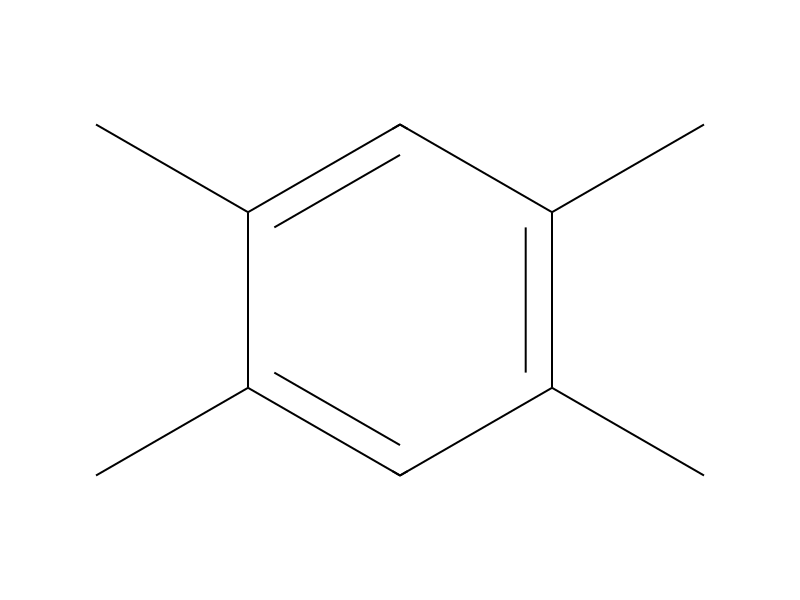



Conditions
- Temperature
- 7.5 °C
Procedure
A mixture of benzoyl chloride (1.85 g, 13 millimoles, Aldrich, 99%) and Aliquat 336 (0.043 g, 0.1 millimoles) was added to a cooled one neck 250 mL flask containing an aqueous solution consisting of sodium cyanide (0.49 g, 10 millimoles, Aldrich, 95+%), sodium hydroxide (0.135 g, 3 millimoles, Merck; the purpose of adding sodium hydroxide is to prevent acidification of the system as a result of benzoyl chloride hydrolysis), and water (50.17 g). The organic phase:aqueous phase weight ratio was 1:26. The reaction mixture was stirred magnetically at 7-8° C. After 5 minutes an aliquot of the mixture (0.50 g) was taken and mixed with 0.25 g of 5% w/w solution of durene in chlorobenzene. The organic phase was injected into the GC instrument. Benzoyl cyanide is the only product (no “dimer” could be detected). The yield is 95%. No benzoyl cyanide was present in the reaction mixture after 5 minutes when the similar reaction was performed without the phase transfer catalyst. Another blank experiment showed that rather insignificant amounts of benzoic acid (less than 10% after 40 minutes at room temperature) were formed from benzoyl chloride within time limits of the benzoyl cyanide formation.
Workup
- customwhen the similar reaction
Sources & evidence
- ORD record
- ord-4749cab17a1f451f95510ee5570317b1
- Source dataset
- uspto-grants-2005_01
- Patent number
- US06846946B2
Reaction notes
Loading…