Mannitol → Sorbitol
Reaction equation

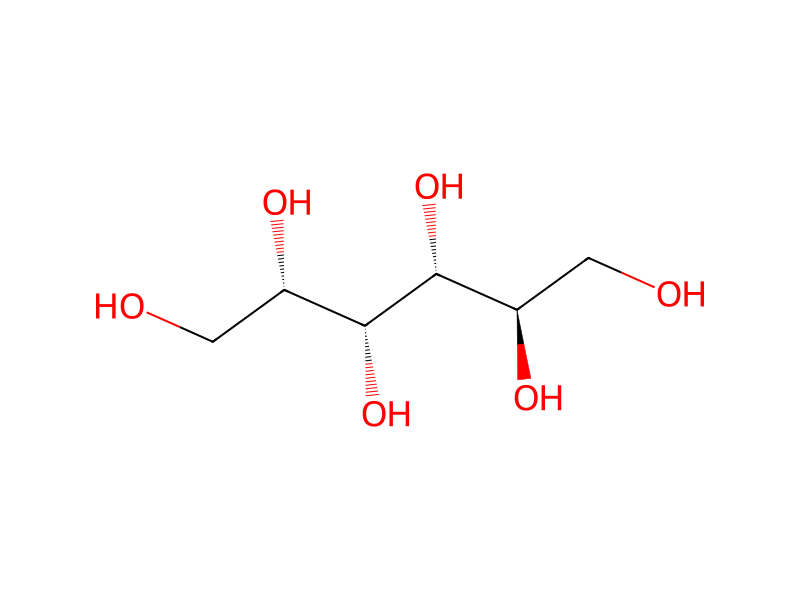
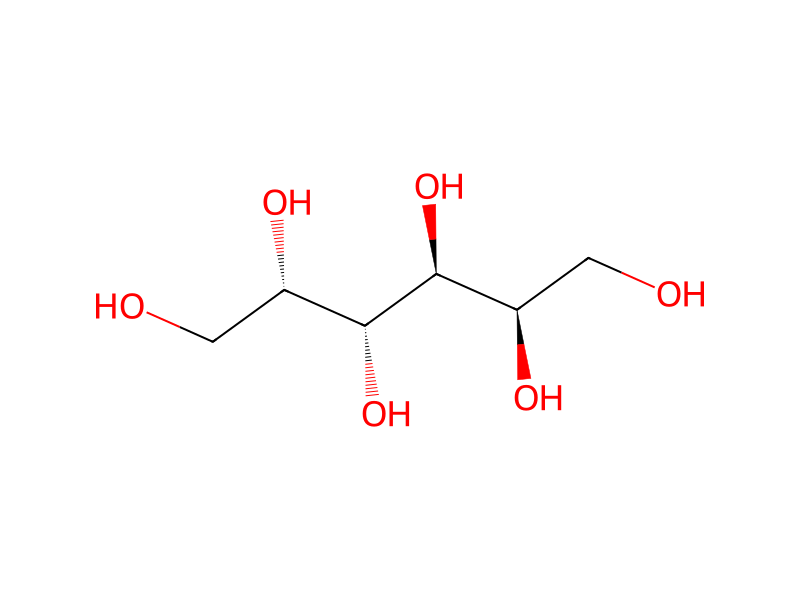
C(#N)C.COC(=O)C(C)=C.[CH2:11]([OH:22])[C@H:12]([C@H:14]([C@@H:16]([C@@H:18]([CH2:20][OH:21])[OH:19])[OH:17])[OH:15])[OH:13]>CO.O>[CH2:20]([OH:21])[C@H:18]([C@H:16]([C@@H:14]([C@@H:12]([CH2:11][OH:22])[OH:13])[OH:15])[OH:17])[OH:19].[OH:21][CH2:20][C@@H:18]([C@H:16]([C@@H:14]([C@@H:12]([CH2:11][OH:22])[OH:13])[OH:15])[OH:17])[OH:19].[CH2:11]([OH:22])[C@@H:12]([OH:13])[C@H:14]([OH:15])[C@H:16]([OH:17])[C@@H:18]([OH:19])[CH2:20][OH:21]Participants
7
Reactant 3
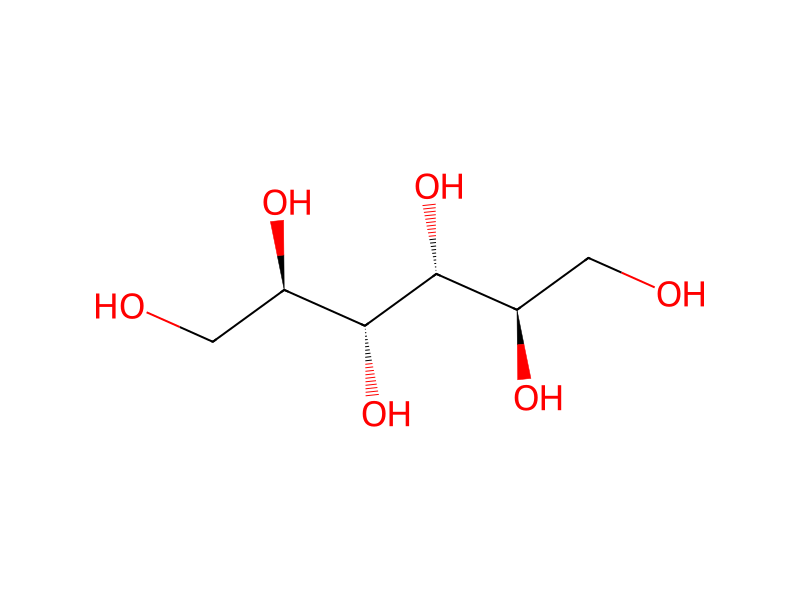


Product 3
Reagents, catalysts & solvents 1

Procedure
3,4; 5,6 - tri - O - (p-vinylphenylboronate), 12 ml acetonitrile, 4 ml methylmethacrylate 5.3 ml glycoldimethacrylate, and 75 mg azoisobutyronitrile (A I B N) are polymerized as described in example 1. The D-mannitol of the produced polymer is dissolved by treating the polymer in a column at 50° with a mixture of methanol/water 1:1. After eluting with 2 l of solvent during 24 hours more than 80 per cent of D-mannitol are removed from the polymer. The polymer shows a good resolving power for the racemate D,L-mannitol. Furthermore one obtains good chromatographic separations between mannitol, sorbitol and dulcitol.
Workup
- additionby treating the polymer in a column at 50°
- washAfter eluting with 2 l of solvent during 24 hours more than 80 per cent of D-mannitol
- customare removed from the polymer
Sources & evidence
- ORD record
- ord-dcc4fb6a01b94c73b1daf78f32fc0c4b
- Source dataset
- uspto-grants-1978_09
- Patent number
- US04111863
Reaction notes
Loading…