Hydrochloric Acid → Quinolinepropionic acid, 1,2,3,4-tetrahydro-
Reaction equation

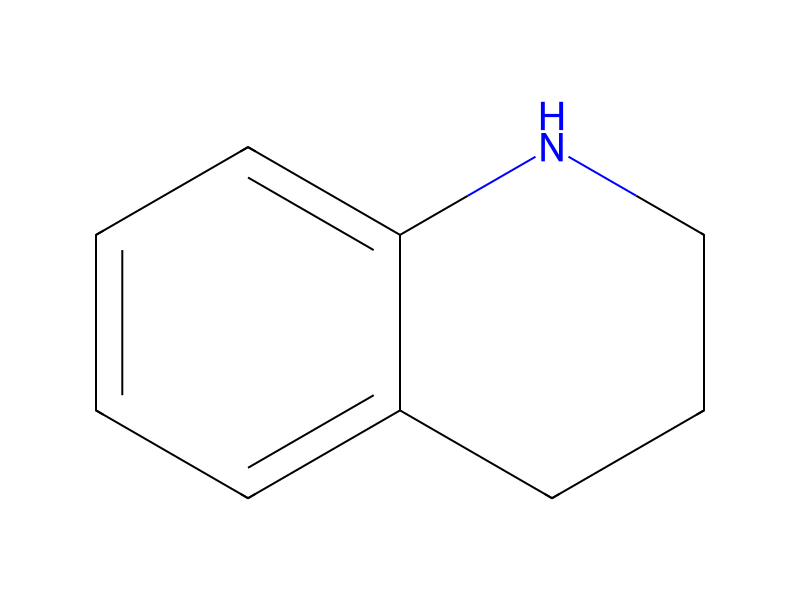
[NH:1]1[C:10]2[C:5](=[CH:6][CH:7]=[CH:8][CH:9]=2)[CH2:4][CH2:3][CH2:2]1.C[O:12][C:13](=[O:16])[CH:14]=[CH2:15].[Li+].[OH-].Cl>C(O)(=O)C.CO>[N:1]1([CH2:15][CH2:14][C:13]([OH:16])=[O:12])[C:10]2[C:5](=[CH:6][CH:7]=[CH:8][CH:9]=2)[CH2:4][CH2:3][CH2:2]1Participants






Procedure
A mixture of 1,2,3,4-tetrahydroquinoline (3.0 g, 22.5 mmol) and methylacrylate (3.88 g, 45.1 mmol) in glacial acetic acid (15 mL) was refluxed for 16 hours. Volatiles were then removed in the rotary evaporator and the residue thus obtained was co-evaporated with methanol (3×20 mL) and then dissolved in 15 mL methanol. To this mixture, an aqueous solution of LiOH (1.9 g, 45 mmol, 15 mL) was added and combined mixture was stirred at room temperature for 2 hours. Reaction mixture was made acidic with conc. HCl (pH˜2) and extracted with ethyl acetate (2×50 mL). The combined organic layers were washed with water (2×100 mL) and brine (2×100 mL) and dried over MgSO4. The solvent was removed under reduced pressure to provide Compound 4 as a dark brown viscous liquid (2.91 g). This product was used without further purification. The structure of Compound 4 is given below:
Workup
- temperaturewas refluxed for 16 hours
- customVolatiles were then removed in the rotary evaporator
- customthe residue thus obtained
- customReaction mixture
- extractionextracted with ethyl acetate (2×50 mL)
- washThe combined organic layers were washed with water (2×100 mL) and brine (2×100 mL)
- dry with materialdried over MgSO4
- customThe solvent was removed under reduced pressure
Sources & evidence
- ORD record
- ord-36ad1e12cb5a4f18808c8764a8cc23f0
- Source dataset
- uspto-grants-2016_02
- Patent number
- US09250249B2
Reaction notes
Loading…