Sodium Acetate → 7-Methylthieno[3,2-d]pyrimidine
Reaction equation

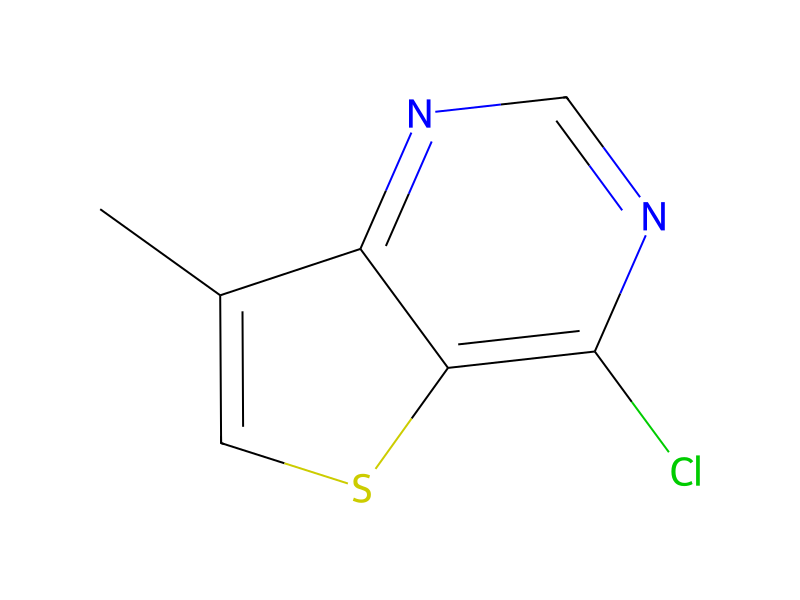
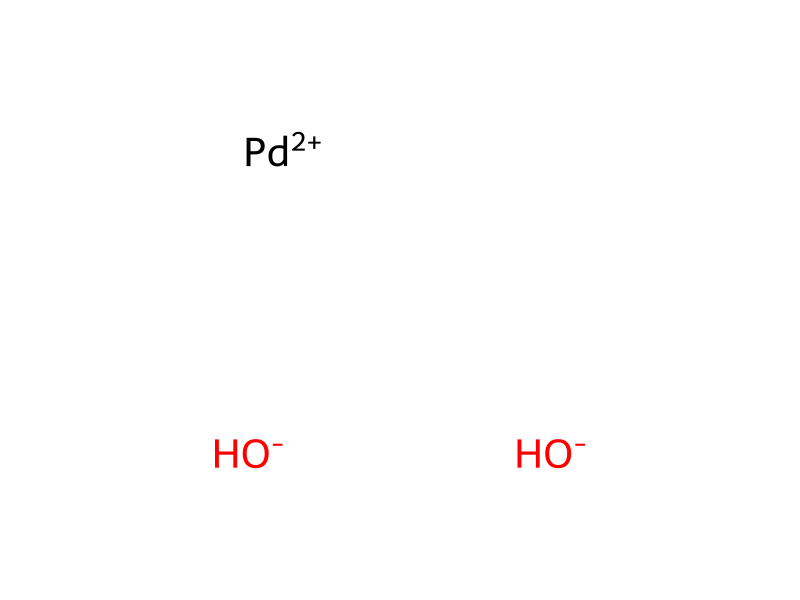
Cl[C:2]1[C:3]2[S:10][CH:9]=[C:8]([CH3:11])[C:4]=2[N:5]=[CH:6][N:7]=1.C([O-])(=O)C.[Na+]>C(OCC)(=O)C.C(O)(C)C.[OH-].[OH-].[Pd+2]>[CH3:11][C:8]1[C:4]2[N:5]=[CH:6][N:7]=[CH:2][C:3]=2[S:10][CH:9]=1Participants
6




Procedure
A mixture of 4-chloro-7-methyl-thieno[3,2-d]pyrimidine (2 g), palladium hydroxide on carbon (20%, 1 g) and sodium acetate (2 g) in a mixture of ethyl acetate and isopropanol (5/1, 30 mL) was shaken in a Parr apparatus under hydrogen atmosphere (50 PSI) overnight. The resulting mixture was filtered on a CELITE™ pad, the filter cake was washed with dichloromethane and the filtrate was evaporated under reduced pressure. The crude residue was purified by flash chromatography (acetone/DCM, 3/97) to afford 1 g of 7-methyl-thieno[3,2-d]pyrimidine.
Workup
- filtrationThe resulting mixture was filtered on a CELITE™ pad
- washthe filter cake was washed with dichloromethane
- customthe filtrate was evaporated under reduced pressure
- customThe crude residue was purified by flash chromatography (acetone/DCM, 3/97)
Sources & evidence
- ORD record
- ord-90b32c500f9d4f0eb37c17b047918406
- Source dataset
- uspto-grants-2016_02
- Patent number
- US09255110B2
Reaction notes
Loading…