Tetraethoxysilane → Hydroxylapatite (Ca5(OH)(PO4)3)
Reaction equation

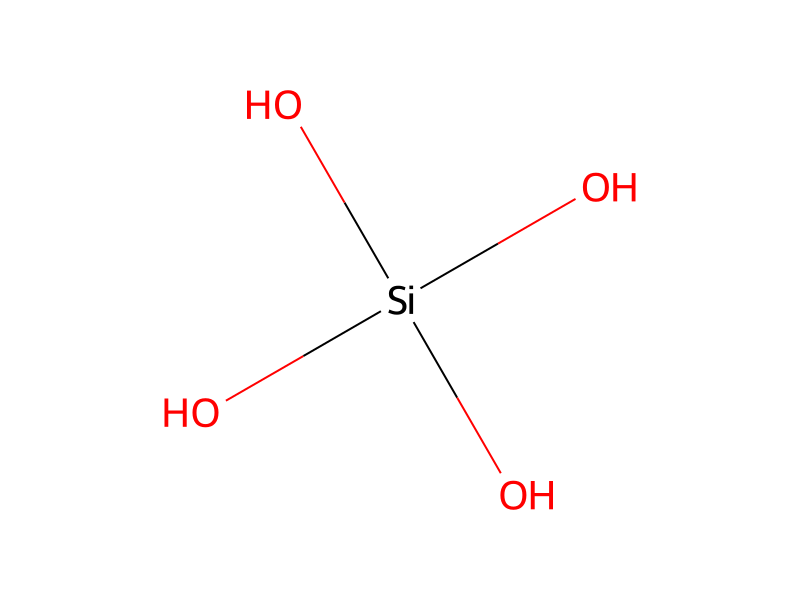
[Si](O)(O)(O)[OH:2].C(O[Si](OCC)(OCC)OCC)C.[P:19]([O-:23])([O-:22])([O-:21])=[O:20].[Ca+2:24].[P:25]([O-:29])([O-:28])([O-:27])=[O:26].[Ca+2].[Ca+2]>O.Cl>[OH-:2].[O-:21][P:19]([O-:23])([O-:22])=[O:20].[O-:27][P:25]([O-:29])([O-:28])=[O:26].[O-:21][P:19]([O-:23])([O-:22])=[O:20].[Ca+2:24].[Ca+2:24].[Ca+2:24].[Ca+2:24].[Ca+2:24]Participants
7
Reactant 3


Product 1

Reagents, catalysts & solvents 3


Procedure
For generating silicic acid, tetraethoxy silane (TEOS, 99%, Sigma) is hydrolyzed by addition of water and hydrochloric acid (10 mmol) as catalyst at 4° C. for 24 hours. The molar ratio of tetraethoxy silane to water is 1:4. This solution serves as the silicate component and is supplied to the collagen suspension that is enriched with calcium phosphate and is mixed intensively. After a few minutes a hydrogel is formed.
Workup
- additionis mixed intensively
- customAfter a few minutes a hydrogel is formed
Sources & evidence
- ORD record
- ord-b41d55afc9b046dd8a2c117c30be2770
- Source dataset
- uspto-grants-2016_02
- Patent number
- US09265861B2
Reaction notes
Loading…