Lithium Hydroxide → 4-Amino-3-Nitrophenol
Reaction equation

[Li+].[OH-:2].[OH-:3].[Na+].[OH-:5].[K+].[N:7]1[C:11]2[CH:12]=[CH:13][CH:14]=[CH:15][C:10]=2[NH:9]C=1.S(S([O-])=O)([O-])=O.[Na+].[Na+]>CC(N(C)C)=O.O1CCCC1.CO>[NH2:9][C:10]1[CH:15]=[CH:14][C:13]([OH:2])=[CH:12][C:11]=1[N+:7]([O-:5])=[O:3]Participants
Reactant 5




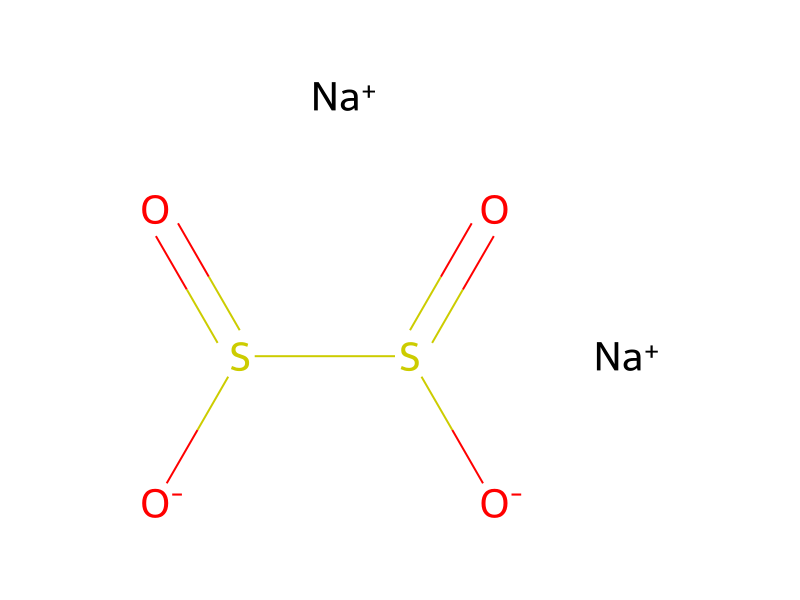
Product 1

Reagents, catalysts & solvents 3



Procedure
Referring to Scheme A, compounds of Formulae (I) are prepared from cyclization of diamines (V) with anhydrides, di-acids, or aldehyde containing acids where R1 is an aryl or heteroaryl substituent and R5 may contain substituents such as alkyl or cycloalkyl carboxylic acids. Ring A may represent or contain various substituents such as alkyls, cycloalkyls, halogens, amines, ethers, and aromatic or heteroaromatic rings. Various substituted anhydrides and diacids used in the preparation of compounds of Formulae (I) were obtained from commercial sources or were prepared using known methods. R6 may be hydrogen or one of various alkyl substituents. Diamines of formula (V) are obtained via alkylation of 4-fluoro-3-nitrophenol (II) with aryl or heteroaryl methylhalides. Preferably, 4-fluoro-3-nitrophenol (II) is treated with the desired halide in the presence of a base, such as K2CO3, Cs2CO3, or NaOH, with or without the presence of potassium iodide in a suitable polar solvent, such as CH3CN, dimethyl formamide (DMF), dimethyl acetamide (DMA), tetrahydrofuran (THF), or a mixture thereof, at a temperature ranging from about 50° C. to about 180° C. using conventional heating or microwave irradiation. Nitroethers (III) are converted to compounds of Formulae (IV) via nucleophilic aromatic substitution (SNAr) with aryl or heteroaryl-substituted methylene amines in the presence of a suitable base, such as DIPEA, Et3N, or a mixture thereof, in a solvent, such as CH3CN, DMF, DMA, N-methyl-2-pyrrolidone (NMP) or a mixture thereof, at a temperature ranging from about 50° C. to about 150° C. Diamines (V) are obtained by reduction of the nitro group using generally known methods, such as hydrogenation over a Pd or Pt catalyst using H2, in solvents, such as THF, MeOH and EtOH, with or without the presence of DIPEA, or Et3N. Alternatively, the nitro group can be reduced through the use of a heterogeneous stoichiometric reductant, such as Zn metal powder, in the presence of an acid, such as NH4Cl or HOAc, in a solvent, such as MeOH, EtOH, acetone, or THF, at a temperature ranging from 0° C. to the reflux temperature of the solvent. Additionally, reduction can occur in the presence of a homogeneous stoichiometric reductant, such as SnCl2.2H2O, in solvents, such as EtOH, MeOH, and EtOAc, at temperatures ranging from 0° C. to the reflux temperature of the solvent. Formation of (I) can be achieved in a two-step process by first reacting diamine (V) with appropriate anhydrides in the presence of a base, such as DIPEA, in a solvent, such as CH3CN, at a temperature ranging from about 50° C. to about 90° C. The product thus obtained is converted to (I) by subjecting it to further heating from 0° C. to the reflux temperature of the solvent, either conventionally or in a microwave reactor, in the presence of an acid, such as HCl, HOAc, or MsOH. Alternatively, formation of (I) can be achieved by heating diamine (V) and an appropriate organic diacid in the presence of a strong acid catalyst or Lewis acidic dehydrating agent, such as HCl or SnCl4 respectively, at a temperature ranging from about 50° C. to about 90° C. In some instances, such as to ease purification, it is desirable to convert (I) to the corresponding alkyl ester by treating (I) with a strong acid, such as HCl, in the presence of an alcoholic solvent, such as EtOH or MeOH, at temperatures ranging from RT to 100° C. Methylesters of (I) can also be obtained using TMSCHN2 in a mixture of toluene and MeOH. Benzimidazole (I) is then obtained by subsequent hydrolysis using known acidic or basic conditions. Preferably, hydrolysis is conducted using a base, such as LiOH, NaOH or KOH, in solvents, such as MeOH, THF, or a mixture thereof, at temperatures ranging from RT to about 80° C. Alternatively, compounds of Formulae (I) can synthesized directly via a reductive coupling from compounds of Formulae (IV) using the corresponding aldehyde or hemiacetal. This reaction is accomplished in the presence of a reducing agent, such as sodium dithionite, in a solvent, such as DMA. Alternatively, compounds of Formulae (IV) could be obtained by alkylation of 4-amino-3-nitrophenol (VII) using analogous conditions stated above to provide (VI). Alkylation with suitable aryl or heteroaryl halomethanes in the presence of a base, such as (iPr)2NEt or Et3N, in a solvent, such as CH3CN, at a temperature ranging from about 50° C. to about 150° C., provides compounds of Formulae (IV). Additionally, compounds of Formulae (IV) can be obtained via reductive amination of (VI). Reductive aminations are performed using the appropriate aryl or heteroaryl aldehyde in the presence of a reductant, such as Na(OAc)3BH or NaB(CN)H3, in solvents, such as dichloromethane (DCM), dichloroethane (DCE), or THF or mixtures thereof.
Workup
- customPreferably, hydrolysis
- customranging from RT to about 80° C
Sources & evidence
- ORD record
- ord-a486f87199eb4182a510cda011450987
- Source dataset
- uspto-grants-2016_02
- Patent number
- US09265770B2
Reaction notes
Loading…