Hydrochloric Acid → (8-Chloro-2-methyl-1,7-naphthyridin-5-yl)boronic acid
Reaction equation

[Cl:1][C:2]1[N:3]=[CH:4][C:5](I)=[C:6]2[C:11]=1[N:10]=[C:9]([CH3:12])[CH:8]=[CH:7]2.C([O:17][B:18](OC(C)C)[O:19]C(C)C)(C)C.C([Li])CCC.Cl>C1COCC1>[Cl:1][C:2]1[C:11]2[N:10]=[C:9]([CH3:12])[CH:8]=[CH:7][C:6]=2[C:5]([B:18]([OH:19])[OH:17])=[CH:4][N:3]=1Participants
6

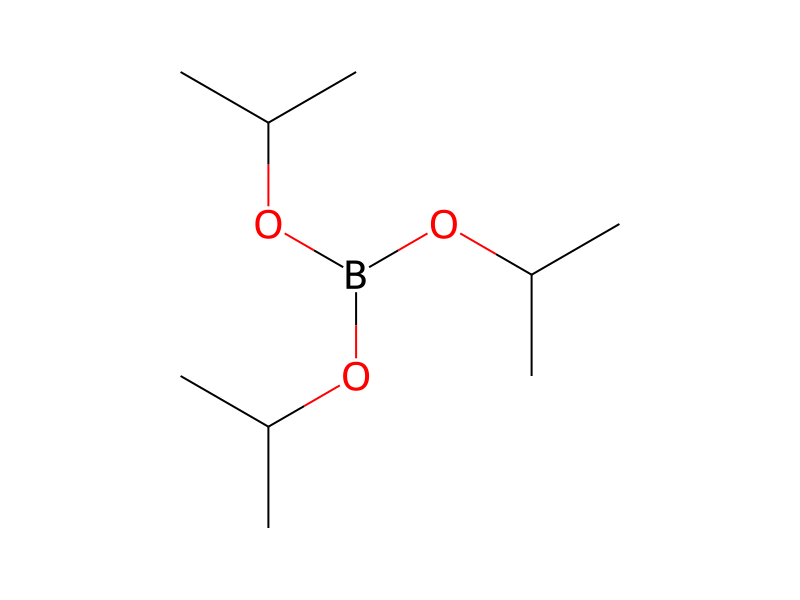




Conditions
- Temperature
- -75 °C
Procedure
8-Chloro-5-iodo-2-methyl-[1,7]naphthyridine (Example I) (2.5 g, 8.2 mmol) and triisopropylborate (1.9 ml, 8.2 mmol) were dissolved in 80 ml THF and cooled to −75° C. n-Butyllithium (1.6M in hexane) (5.1 ml, 8.2 mmol) was added drop wise at −70° C. The reaction mixture was stirred for 1 hour at −75° C. and for 1 hour without ice-bath. 10 ml 2N HCl-solution were added and extracted three times with ethyl acetate. The organic layers were washed with brine, dried over Na2SO4 and concentrated in vacuo. The residue was crystallized in acetonitrile to get the desired compound as a red solid (1.05 g, 58%), MS: m/e=221.3 (M−H+).
Workup
- additionwas added drop wise at −70° C
- extractionextracted three times with ethyl acetate
- washThe organic layers were washed with brine
- dry with materialdried over Na2SO4
- concentrationconcentrated in vacuo
- customThe residue was crystallized in acetonitrile
Sources & evidence
- ORD record
- ord-15064e6f9a344bebb8a4e5e6287feab5
- Source dataset
- uspto-grants-2009_03
- Patent number
- US07511055B2
Reaction notes
Loading…