1,4-Dibromobutane → 1-(4-Bromobutan-1-yl)-3,4-dihydroquinolin-2(1H)-one
Reaction equation

[H-].[Na+].[NH:3]1[C:12]2[C:7](=[CH:8][CH:9]=[CH:10][CH:11]=2)[CH2:6][CH2:5][C:4]1=[O:13].[Br:14][CH2:15][CH2:16][CH2:17][CH2:18]Br>CN(C)C=O>[Br:14][CH2:15][CH2:16][CH2:17][CH2:18][N:3]1[C:12]2[C:7](=[CH:8][CH:9]=[CH:10][CH:11]=2)[CH2:6][CH2:5][C:4]1=[O:13]Participants
Reactant 3


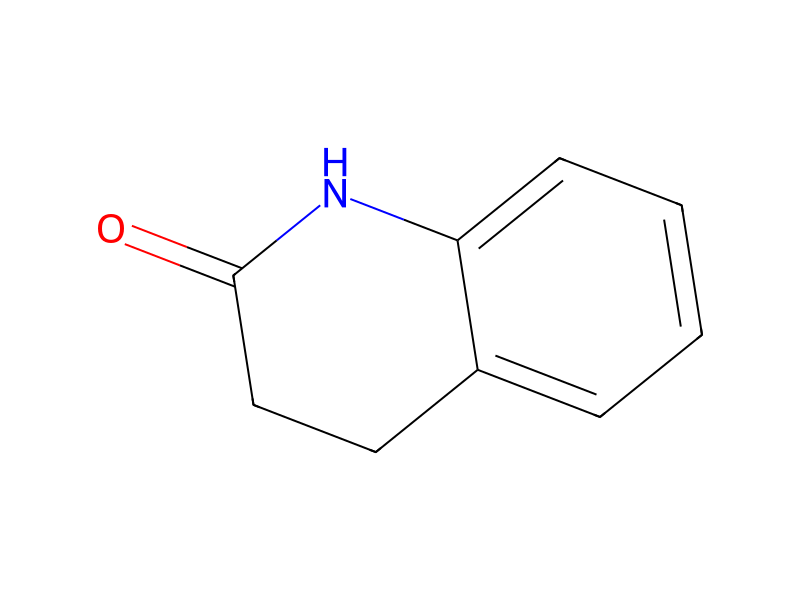
Product 1

Reagents, catalysts & solvents 1

Procedure
A suspension of sodium hydride (6.8 g, 60% dispersion in mineral oil) and dimethyl formamide (200 mL) was kept at 20–30° C. followed by the addition of a solution of 3,4-dihydroquinolin-2(1H)-one (25 g) in dimethyl formamide (100 mL). The resulting mixture was stirred at room temperature for 30 min followed by the addition of a solution of 1,4-dibromobutane (184 g) in dimethyl formamide (200 mL) at a temperature of 20–40° C. The reaction mixture was stirred at room temperature for 30 min and evaporated in vacuo. The remaining oil was poured into ice water and extracted with ethyl acetate. The combined organic phases were washed with water and brine, treated with charcoal, dried (MgSO4) and evaporated in vacuo. The remaining oil was purified by flash chromatography (eluent:ethyl acetate/heptane 1:1) giving the title compound as a red oil (36 g).
Workup
- customwas kept at 20–30° C.
- stirringThe reaction mixture was stirred at room temperature for 30 min
- customevaporated in vacuo
- additionThe remaining oil was poured into ice water
- extractionextracted with ethyl acetate
- washThe combined organic phases were washed with water and brine
- additiontreated with charcoal
- dry with materialdried (MgSO4)
- customevaporated in vacuo
- customThe remaining oil was purified by flash chromatography (eluent:ethyl acetate/heptane 1:1)
Sources & evidence
- ORD record
- ord-5cf14fa7563d49d78e92d52b25a29237
- Source dataset
- uspto-grants-2006_07
- Patent number
- US07074796B2
Reaction notes
Loading…