Hydrochloric Acid → HCID 135677702, compound
Reaction equation

[C:1]([C:3]1[CH:9]=[CH:8][C:6]([NH2:7])=[CH:5][CH:4]=1)#[N:2].Cl.[N:11](OS(=O)(=O)O)=O.[Br:18][C:19]1[CH:24]=[CH:23][CH:22]=[CH:21][C:20]=1[OH:25].[OH-].[Na+]>O.CO>[OH:25][C:20]1[CH:21]=[CH:22][C:23]([N:11]=[N:7][C:6]2[CH:8]=[CH:9][C:3]([C:1]#[N:2])=[CH:4][CH:5]=2)=[CH:24][C:19]=1[Br:18]Participants


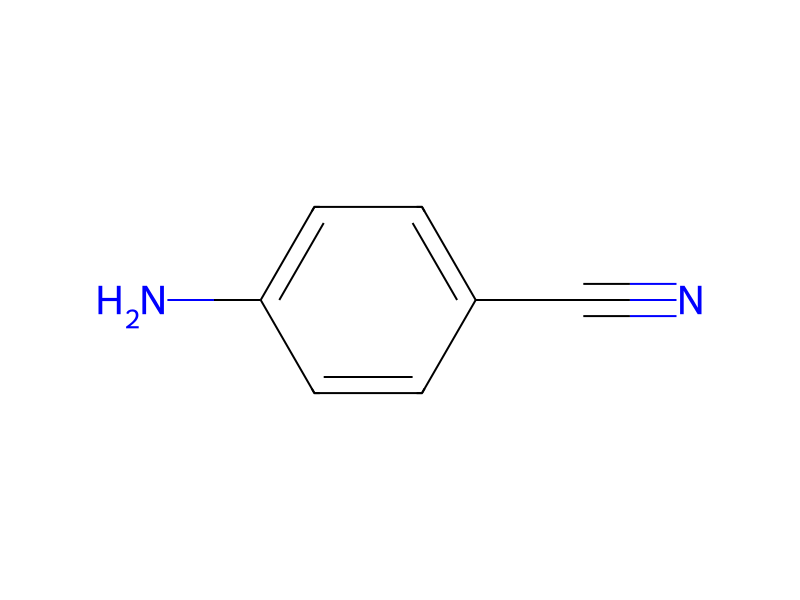





Procedure
18.8 g 4-cyanoaniline are heated at 60° C. in 100 ml water. To dissolve the solid, 10 ml conc. hydrochloric acid are added. A further 115 ml hydrochloric acid are then added, the temperature of the solution is brought to 0° C., 52 g nitrosylsulfuric acid are slowly added dropwise and the mixture is stirred for 1 h. This solution is slowly added dropwise to a solution of 27.5 g 2-bromophenol, 100 ml methanol and 100 ml water at 10° C. A pH of 6–6.5 is maintained by simultaneous addition of 10% sodium hydroxide solution. When the addition is complete, the stirred mass is allowed to react for a further hour and the precipitate is filtered off with suction. The product is then washed with water and dried. The yield of 4-hydroxy-3-bromo-4′-cyanoazobenzene is 68 g.
Workup
- additionare added
- customis brought to 0° C.
- additionWhen the addition
- customto react for a further hour
- filtrationthe precipitate is filtered off with suction
- washThe product is then washed with water
- customdried
Sources & evidence
- ORD record
- ord-0c559d4984104c8aaaba634ab0fdd6b6
- Source dataset
- uspto-grants-2006_04
- Patent number
- US07022460B2
Reaction notes
Loading…