Diethylamine → N,N-diethyl-4-formylbenzamide
Reaction equation

[C:1]([C:4]1[CH:11]=[CH:10][C:7]([CH:8]=[O:9])=[CH:6][CH:5]=1)([OH:3])=O.[CH2:12]([N:14](CC)[CH2:15][CH3:16])[CH3:13].C(Cl)(=O)C(C)(C)C.C(NCC)C>O1CCCC1>[CH:8]([C:7]1[CH:10]=[CH:11][C:4]([C:1]([N:14]([CH2:15][CH3:16])[CH2:12][CH3:13])=[O:3])=[CH:5][CH:6]=1)=[O:9]Participants
Reactant 4


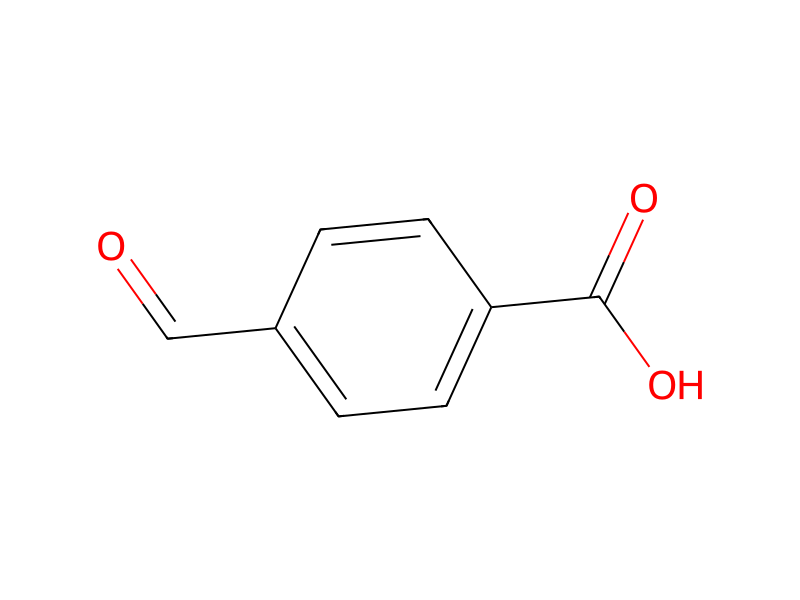

Product 1

Reagents, catalysts & solvents 1

Conditions
- Temperature
- -4 °C
Procedure
To a 12 L flask equipped with mechanical stirrer and cold bath was charged 300 g (2 mol) of 4-carboxybenzaldehyde, 4.5 L of tetrahydrofuran and 245 g (2.4 mol) of triethylamine. This solution was cooled to −4° C. with methanol/ice bath. To the reaction was charged 236 g (1.9 mol) of pivaloyl chloride at a rate that maintained the temperature below 5° C. After stirring for 2 h the resulting slurry was filtered and the filter cake was washed with 1 L of THF. The filtrates were returned to the reactor and cooled below −5° C. Diethylamine (438 g, 6 mol) was slowly added maintaining the temperature below 0° C. The reaction was stirred for several hours and allowed to warm. The solvent was then removed under vacuum and the resulting residue was dissolved in 2 L of ethyl acetate. The resulting solution was washed with 1 L of water and the aqueous layer was back-extracted with 2×500 mL ethyl acetate. The combined organic layer was washed with 3×500 mL of 1 N HCl and 3×500 mL of NaHCO3 (aq, sat). This solution was dried with Na2SO4 and the solvent was removed under vacuum to give a golden brown oil (172 g, 85%) containing ˜13% impurity by NMR. The aldehyde was used with out further purification.
Workup
- customTo a 12 L flask equipped with mechanical stirrer and cold bath
- temperaturemaintained the temperature below 5° C
- filtrationwas filtered
- washthe filter cake was washed with 1 L of THF
- temperaturecooled below −5° C
- temperaturemaintaining the temperature below 0° C
- stirringThe reaction was stirred for several hours
- temperatureto warm
- customThe solvent was then removed under vacuum
- dissolutionthe resulting residue was dissolved in 2 L of ethyl acetate
- washThe resulting solution was washed with 1 L of water
- extractionthe aqueous layer was back-extracted with 2×500 mL ethyl acetate
- washThe combined organic layer was washed with 3×500 mL of 1 N HCl and 3×500 mL of NaHCO3 (aq, sat)
- dry with materialThis solution was dried with Na2SO4
- customthe solvent was removed under vacuum
Sources & evidence
- ORD record
- ord-225b749de37643cfb46663b3eb6f7940
- Source dataset
- uspto-grants-2006_04
- Patent number
- US07030124B2
Reaction notes
Loading…