Sodium Carbonate → 2-Bromo-6-phenylpyridine
Reaction equation

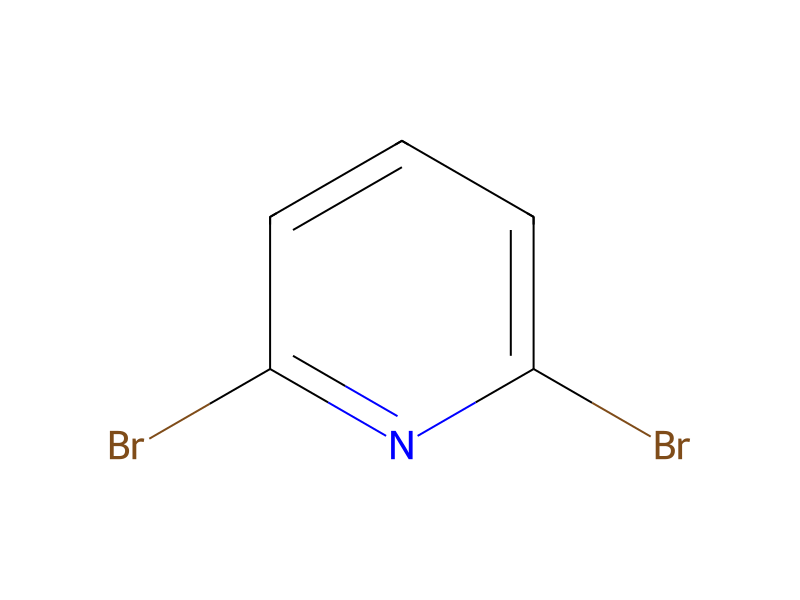
Br[C:2]1[CH:7]=[CH:6][CH:5]=[C:4]([Br:8])[N:3]=1.[C:9]1(B(O)O)[CH:14]=[CH:13][CH:12]=[CH:11][CH:10]=1.C(=O)([O-])[O-].[Na+].[Na+]>O1CCCC1.C1C=CC([P]([Pd]([P](C2C=CC=CC=2)(C2C=CC=CC=2)C2C=CC=CC=2)([P](C2C=CC=CC=2)(C2C=CC=CC=2)C2C=CC=CC=2)[P](C2C=CC=CC=2)(C2C=CC=CC=2)C2C=CC=CC=2)(C2C=CC=CC=2)C2C=CC=CC=2)=CC=1>[Br:8][C:4]1[CH:5]=[CH:6][CH:7]=[C:2]([C:9]2[CH:14]=[CH:13][CH:12]=[CH:11][CH:10]=2)[N:3]=1Participants





Procedure
A degassed solution of 2,6-dibromopyridine (4.0 g, 16.5 mmol) and phenylboronic acid (2.1 g, 16.7 mmol) in dry tetrahydrofuran (30 ml) was stirred under an atmosphere of nitrogen then sodium carbonate (3.55 g, 33.5 mmol) and tetrakis(triphenylphosphine)palladium(0) (0.95 g, 5 mol %) added. This mixture was heated to reflux for 18 h. After cooling to ambient temperature, solvent was removed in vacuo, the residue dissolved in dichloromethane, washed with water and saturated brine, then dried over magnesium sulfate, filtered and evaporated in vacuo to give a solid. Purification by chromatography on silica gel eluting with dichloromethane gave 2-bromo-6-phenylpyridine (0.17 g) as a white solid: δH (400 MHz, CDCl3) 7.45 (4H, m), 7.60 (1H, dd, J 8 and 8), 7.70 (1H, d, J 8), 7.99 (2H, d, J 8); m/z (ES+) 233/235 (M++H).
Workup
- temperatureThis mixture was heated
- temperatureto reflux for 18 h
- customsolvent was removed in vacuo
- dissolutionthe residue dissolved in dichloromethane
- washwashed with water and saturated brine
- dry with materialdried over magnesium sulfate
- filtrationfiltered
- customevaporated in vacuo
- customto give a solid
- customPurification by chromatography on silica gel eluting with dichloromethane
Sources & evidence
- ORD record
- ord-5c452eab8b9046feb80c87a1dff4284d
- Source dataset
- uspto-grants-2006_04
- Patent number
- US07030128B2
Reaction notes
Loading…