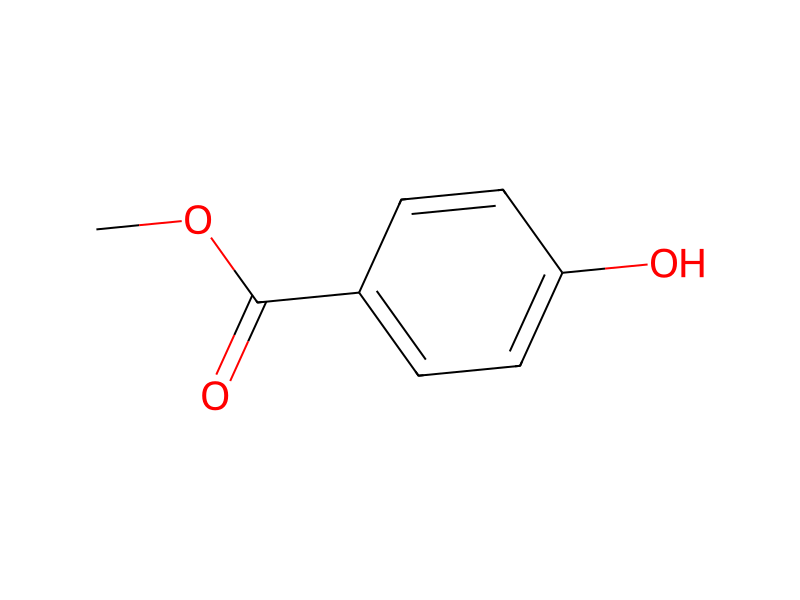
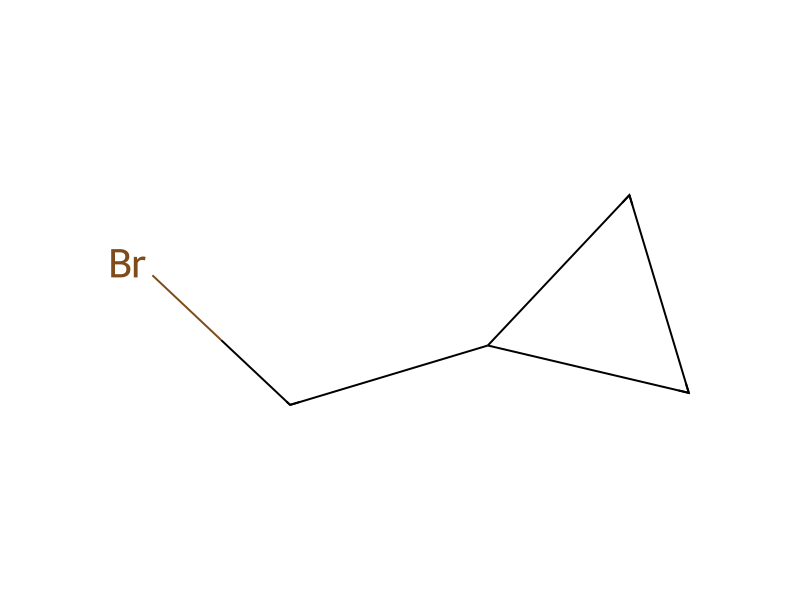
Methylparaben → Methyl 4-(cyclopropylmethoxy)benzoate
Reaction equation

C(=O)([O-])[O-].[K+].[K+].[OH:7][C:8]1[CH:17]=[CH:16][C:11]([C:12]([O:14][CH3:15])=[O:13])=[CH:10][CH:9]=1.[CH:18]1([CH2:21]Br)[CH2:20][CH2:19]1>[I-].[K+].CC(=O)CC>[CH:18]1([CH2:21][O:7][C:8]2[CH:9]=[CH:10][C:11]([C:12]([O:14][CH3:15])=[O:13])=[CH:16][CH:17]=2)[CH2:20][CH2:19]1Participants




Conditions
- Temperature
- 75 °C
Procedure
Potassium carbonate (114 g, 827 mmol) and potassium iodide (0.5 g) were added to a 2-butanone (535 mL) solution of methyl 4-hydroxybenzoate (52.4 g, 345 mmol) and cyclopropylmethyl bromide (72.7 g, 517 mmol) at room temperature. The mixture was stirred at 75° C. for 4 hours. The reaction solution was cooled to room temperature, and insoluble substances were separated by filtration. The insoluble substances were further washed with 2-butanone, and the filtrate was concentrated. The residue was dissolved in ethyl acetate (1 L), washed with water and saturated brine, and dried over anhydrous magnesium sulfate. The solvent was evaporated, and the obtained residue was dried under reduced pressure to give 71.6 g of methyl 4-(cyclopropylmethoxy)benzoate (colorless crystal). All this crystal was dissolved in methanol (715 mL), and a 2 N sodium hydroxide aqueous solution (345 mL, 690 mmol) was added thereto. The resulting mixture was stirred at 60° C. for 3 hours, and the solvents (mainly methanol) were evaporated. The residue was suspended in water (500 mL), and 2 N hydrochloric acid (360 mL) was added thereto under ice-cooling with stirring. The precipitated white solid was collected by filtration, washed with water and n-hexane, and dried under reduced pressure to give 64.6 g of the title compound (white powder, yield: 97%).
Workup
- temperatureThe reaction solution was cooled to room temperature
- custominsoluble substances were separated by filtration
- washThe insoluble substances were further washed with 2-butanone
- concentrationthe filtrate was concentrated
- dissolutionThe residue was dissolved in ethyl acetate (1 L)
- washwashed with water and saturated brine
- dry with materialdried over anhydrous magnesium sulfate
- customThe solvent was evaporated
- customthe obtained residue was dried under reduced pressure
Sources & evidence
- ORD record
- ord-752b0651db764a7b8e8ee4c96956fe8d
- Source dataset
- uspto-grants-2013_01
- Patent number
- US08344029B2
Reaction notes
Loading…