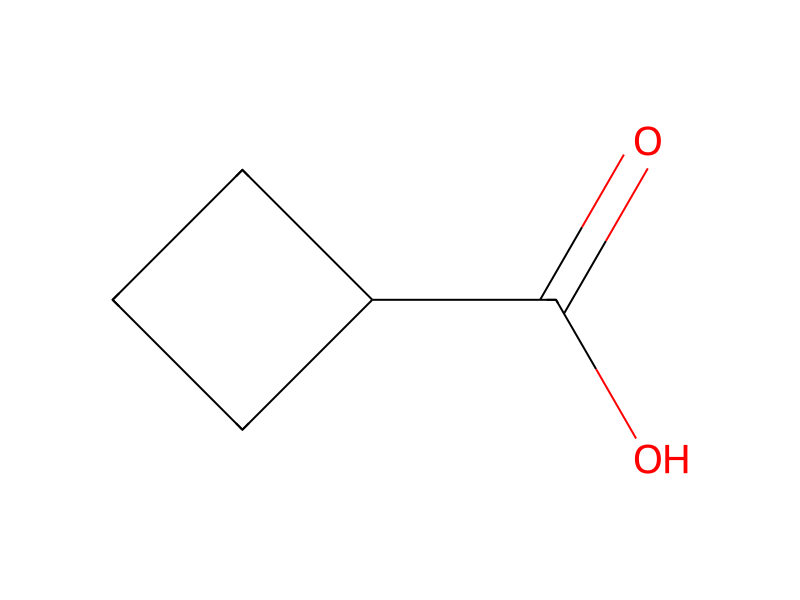
Cyclobutanecarboxylic acid → HCID 67442483, compound
Reaction equation

[NH2:1][C:2]1[CH:7]=[CH:6][CH:5]=[CH:4][C:3]=1[CH:8]1[C:17]([CH3:19])([CH3:18])[CH2:16][C:15]2[C:10](=[CH:11][CH:12]=[C:13]([C:20]([O:22][CH3:23])=[O:21])[CH:14]=2)[NH:9]1.[CH:24]1([C:28](O)=[O:29])[CH2:27][CH2:26][CH2:25]1.C(N(CC)C(C)C)(C)C.P(Cl)(Cl)(Cl)=O>ClCCl>[CH:24]1([C:28]([NH:1][C:2]2[CH:7]=[CH:6][CH:5]=[CH:4][C:3]=2[CH:8]2[C:17]([CH3:18])([CH3:19])[CH2:16][C:15]3[C:10](=[CH:11][CH:12]=[C:13]([C:20]([O:22][CH3:23])=[O:21])[CH:14]=3)[NH:9]2)=[O:29])[CH2:27][CH2:26][CH2:25]1Participants





Procedure
To an ice-cold mixture of methyl 2-(2-aminophenyl)-3,3-dimethyl-1,2,3,4-tetrahydroquinoline-6-carboxylate (80 mg, 0.26 mmol, 1.0 eq.), cyclobutanecarboxylic acid (36 mg, 0.34 mmol, 1.5 eq.), N,N-diisopropylethylamine (63 mg, 0.51 mmol, 2.0 eq.) in dichloromethane (4 mL) was added a solution of phosphorus oxychloride (45 mg, 0.31 mmol, 1.2 eq.). Then the reaction mixture was stirred at room temperature for 30 min. Thin layer chromatography and LC-MS indicated that the starting material was consumed completely. The reaction was quenched with 20 mL water and extracted with ethyl acetate (20 mL×2). The combined organic layers were concentrated in vacuo and the residue was purified by column chromatography on silica gel (petroleum ether/ethyl acetate=2:1) to afford 54 mg of methyl 2-(2-(cyclobutanecarboxamido)phenyl)-3,3-dimethyl-1,2,3,4-tetrahydroquinoline-6-carboxylate as a pale yellow solid; yield: 53%. MS (ESI+APCI) M+1=393.2.
Workup
- customwas consumed completely
- customThe reaction was quenched with 20 mL water
- extractionextracted with ethyl acetate (20 mL×2)
- concentrationThe combined organic layers were concentrated in vacuo
- customthe residue was purified by column chromatography on silica gel (petroleum ether/ethyl acetate=2:1)
Sources & evidence
- ORD record
- ord-5a41a7342a904580b647a4d43edb97bb
- Source dataset
- uspto-grants-2013_01
- Patent number
- US08344137B2
Reaction notes
Loading…