Benzyl Bromide → 1-benzyl-1,2,3,4-tetrahydroquinoline
Reaction equation

[NH:1]1[C:10]2[C:5](=[CH:6][CH:7]=[CH:8][CH:9]=2)[CH2:4][CH2:3][CH2:2]1.[CH2:11](Br)[C:12]1[CH:17]=[CH:16][CH:15]=[CH:14][CH:13]=1.C(N(C(C)C)CC)(C)C>CN(C=O)C.[Cl-].[Na+].O>[CH2:11]([N:1]1[C:10]2[C:5](=[CH:6][CH:7]=[CH:8][CH:9]=2)[CH2:4][CH2:3][CH2:2]1)[C:12]1[CH:17]=[CH:16][CH:15]=[CH:14][CH:13]=1Participants
6

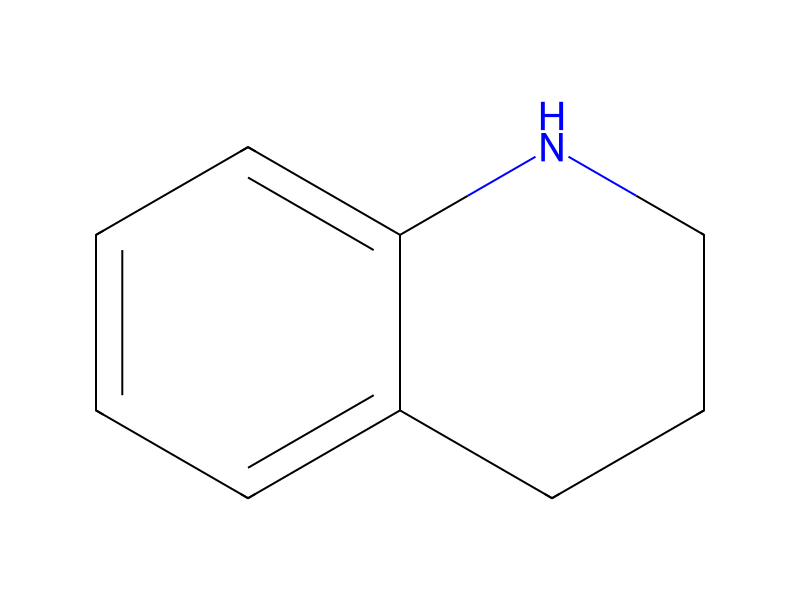




Conditions
- Temperature
- 120 °C
Procedure
A mixture of 1,2,3,4-tetrahydroquinoline (0.5 g, 3.75 mmol), benzyl bromide (0.67 mL, 5.63 mmol) and diisopropylethyl amine (0.98 mL, 5.63 mmol) in DMF (5 mL) was heated in an oil bath (T˜120° C.) for 16 hours. Reaction mixture was cooled, added to brine (75 mL) and extracted with ethyl acetate (100 mL). Organic layer was washed with brine (4×) and decolorized with activated charcoal. Upon filtering, it was dried with MgSO4, filtered again and evaporated to dryness to provide Compound 5 as an oily residue (420 mg) with the structure given below:
Workup
- customReaction mixture
- temperaturewas cooled
- extractionextracted with ethyl acetate (100 mL)
- washOrganic layer was washed with brine (4×)
- filtrationUpon filtering
- dry with materialit was dried with MgSO4
- filtrationfiltered again
- customevaporated to dryness
Sources & evidence
- ORD record
- ord-80a34d9d1b8e48c5993d1ab9f6e8defa
- Source dataset
- uspto-grants-2013_01
- Patent number
- US08362250B2
Reaction notes
Loading…