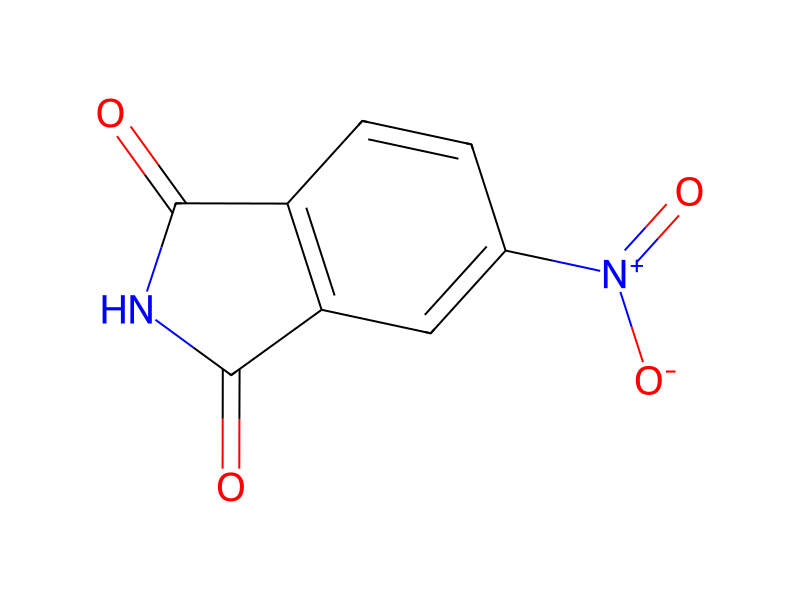
4-Nitrophthalimide → HCID 22502087, compound
Reaction equation

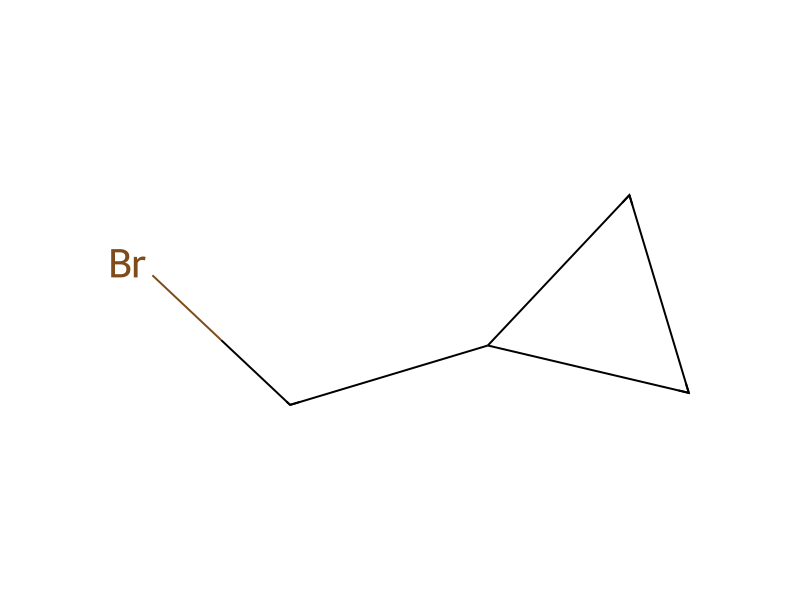
[N+:1]([C:4]1[CH:5]=[C:6]2[C:11](=[O:12])[NH:10][C:8](=[O:9])[C:7]2=[CH:13][CH:14]=1)([O-:3])=[O:2].[CH:15]1([CH2:18]Br)[CH2:17][CH2:16]1.C(=O)([O-])[O-].[K+].[K+]>CN(C=O)C>[CH:15]1([CH2:18][N:10]2[C:11](=[O:12])[C:6]3=[CH:5][C:4]([N+:1]([O-:3])=[O:2])=[CH:14][CH:13]=[C:7]3[C:8]2=[O:9])[CH2:17][CH2:16]1Participants
5
Reactant 3

Product 1

Reagents, catalysts & solvents 1

Conditions
- Temperature
- 100 °C
Procedure
4-Nitrophthalimide (6.15 g, 32.0 mmol) was dissolved in DMF (60 mL). Cyclopropylmethyl bromide (9.3 mL, 96 mmol) and potassium carbonate (8.85 g, 64.0 mmol) were added and the mixture was heated to 100° C. for 4 hours. The mixture was allowed to cool to room temperature, and then partitioned between water (500 mL) and ethyl acetate (400 mL). The organic phase was collected, dried with Na2SO4, filtered and taken to dryness using rotary evaporation. The residue was dried overnight in a vacuum oven to afford 6.49 g (82%) of pure N-cyclopropylmethyl-4-nitrophthalimide as a powder.
Workup
- temperatureto cool to room temperature
- custompartitioned between water (500 mL) and ethyl acetate (400 mL)
- customThe organic phase was collected
- dry with materialdried with Na2SO4
- filtrationfiltered
- customevaporation
- customThe residue was dried overnight in a vacuum oven
Sources & evidence
- ORD record
- ord-00f76ccdb3ec41129714f116a75bf17a
- Source dataset
- uspto-grants-2005_04
- Patent number
- US06875760B2
Reaction notes
Loading…