Potassium Carbonate → 1-(2-Nitrophenyl)pyrrolidine
Reaction equation

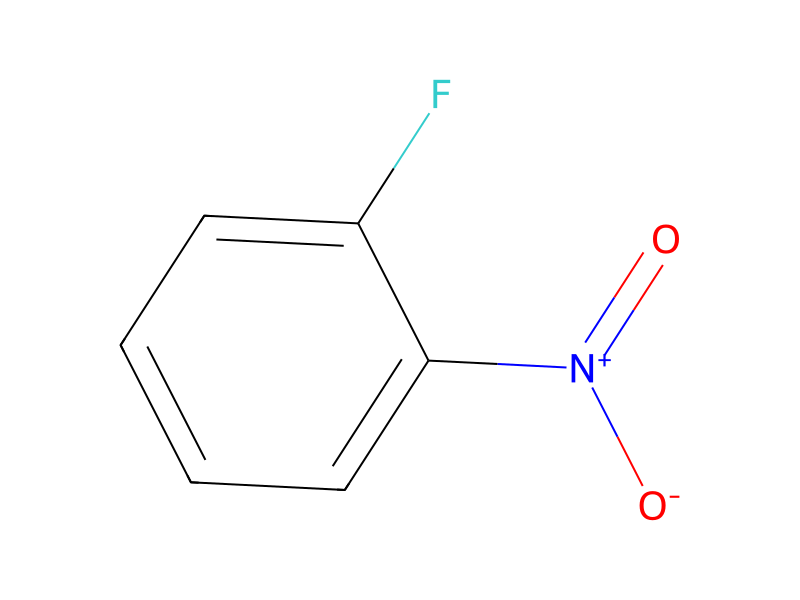
F[C:2]1[CH:7]=[CH:6][CH:5]=[CH:4][C:3]=1[N+:8]([O-:10])=[O:9].[NH:11]1[CH2:15][CH2:14][CH2:13][CH2:12]1.C(=O)([O-])[O-].[K+].[K+]>CN(C=O)C>[N+:8]([C:3]1[CH:4]=[CH:5][CH:6]=[CH:7][C:2]=1[N:11]1[CH2:15][CH2:14][CH2:13][CH2:12]1)([O-:10])=[O:9]Participants
Reactant 3


Product 1

Reagents, catalysts & solvents 1

Procedure
|2-Fluoronitrobenzene (2.82 g, 20 mmol) was mixed with pyrrolidine (1.56 g, 22 mmol), and potassium carbonate (5.5 g, 40 mmol) in DMF (10 mL). After beating for 16 hours, the mixture was filtered and the filtrate evaporated in vacuo to an oil. This oil was treated with water (10 mL) and dichloromethane (100 mL). The organic phase was collected, dried (MgSO4), filtered, and evaporated to give 1-(2-nitrophenyl)pyrrolidine (0.5 g). The crude product was reduced using 5% palladium on carbon (0.1 g) in ethanol (30mL) and hydrogen at 40 psi for 2 hours. The solution was filtered through celite to remove catalyst and the filtrate evaporated in vacuo to give 2-(1-pyrrolidino)aniline (0.33 g). The crude product was coupled with CMI, under conditions described in the general procedure for CM couplings, to give N-(4,5-dihydro-1H-imidazol-2-ylmethyl)-2-(1-pyrrolidinyl)aniline.
Workup
- filtrationthe mixture was filtered
- customthe filtrate evaporated in vacuo to an oil
- additionThis oil was treated with water (10 mL) and dichloromethane (100 mL)
- customThe organic phase was collected
- dry with materialdried (MgSO4)
- filtrationfiltered
- customevaporated
Sources & evidence
- ORD record
- ord-94977385d8a342d7b4a046cc77ff3165
- Source dataset
- uspto-grants-2005_04
- Patent number
- US06884801B1
Reaction notes
Loading…