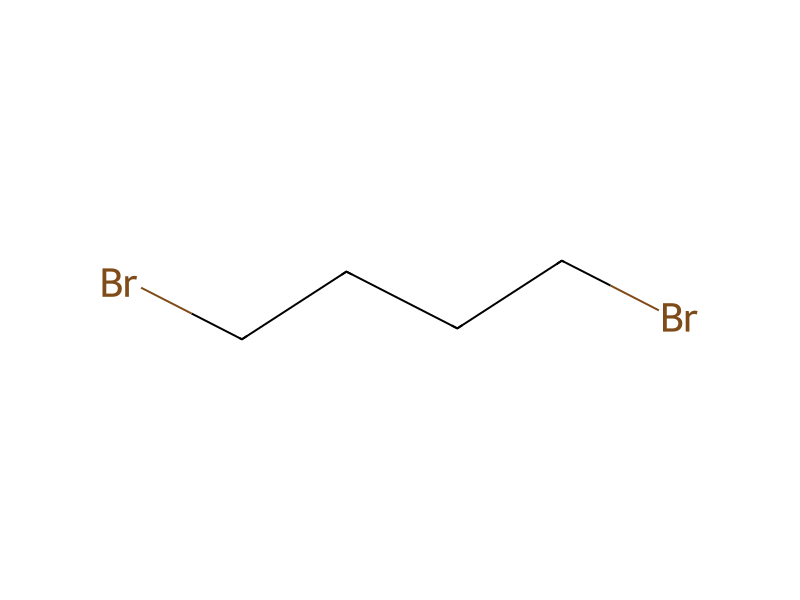
1,4-Dibromobutane → (4-Pyrrolidin-1-yl-cyclohexylmethyl)-carbamic acid benzyl ester
Reaction equation

[CH2:1]([O:8][C:9](=[O:19])[NH:10][CH2:11][CH:12]1[CH2:17][CH2:16][CH:15]([NH2:18])[CH2:14][CH2:13]1)[C:2]1[CH:7]=[CH:6][CH:5]=[CH:4][CH:3]=1.C([O-])([O-])=O.[K+].[K+].Br[CH2:27][CH2:28][CH2:29][CH2:30]Br>CN(C=O)C.CCOC(C)=O>[CH2:1]([O:8][C:9](=[O:19])[NH:10][CH2:11][CH:12]1[CH2:17][CH2:16][CH:15]([N:18]2[CH2:30][CH2:29][CH2:28][CH2:27]2)[CH2:14][CH2:13]1)[C:2]1[CH:3]=[CH:4][CH:5]=[CH:6][CH:7]=1Participants
6
Reactant 3


Product 1

Reagents, catalysts & solvents 2


Procedure
To a solution of (4-amino-cyclohexylmethyl)-carbamic acid benzyl ester (350 mg, 1.34 mmol) in DMF (5 mL) was added K2CO3 (924 mg, 6.70 mmol) and 1,4-dibromobutane (160 mL, 1.34 mmol). The reaction mixture was stirred at room temperature for 14 h before diluting with EtOAc (100 mL). The reaction solution was washed with water (2×100 mL) and brine before concentrating in vacuo. The residue was purified by chromatography using a 12 g ISCO combi-flash cartridge (silica gel, 95:4.75:0.25 DCM/MeOH/NH4OH) to afford (4-pyrrolidin-1-yl-cyclohexylmethyl)-carbamic acid benzyl ester (351 mg, 83%) as an off-white solid.
Workup
- washThe reaction solution was washed with water (2×100 mL) and brine
- concentrationbefore concentrating in vacuo
- customThe residue was purified by chromatography
Sources & evidence
- ORD record
- ord-e95d56347059468489654d1791d1a7b3
- Source dataset
- uspto-grants-2009_10
- Patent number
- US07601714B2
Reaction notes
Loading…