Hydrochloric Acid → (s)-1-(2-Hydroxyethyl)-3-(5-chloroindole-2-carbonylamino)-3,4-dihydrocarbostyril
Reaction equation

[C:1]([CH2:4][N:5]1[C:15]2[C:10](=[CH:11][CH:12]=[CH:13][CH:14]=2)[CH2:9][C@H:8]([NH:16][C:17]([C:19]2[NH:20][C:21]3[C:26]([CH:27]=2)=[CH:25][C:24]([Cl:28])=[CH:23][CH:22]=3)=[O:18])[C:6]1=[O:7])(O)=[O:2].Cl.C(OCC)(=O)C>B.O1CCCC1>[OH:2][CH2:1][CH2:4][N:5]1[C:15]2[C:10](=[CH:11][CH:12]=[CH:13][CH:14]=2)[CH2:9][C@H:8]([NH:16][C:17]([C:19]2[NH:20][C:21]3[C:26]([CH:27]=2)=[CH:25][C:24]([Cl:28])=[CH:23][CH:22]=3)=[O:18])[C:6]1=[O:7]Participants
6
Reactant 3



Product 1

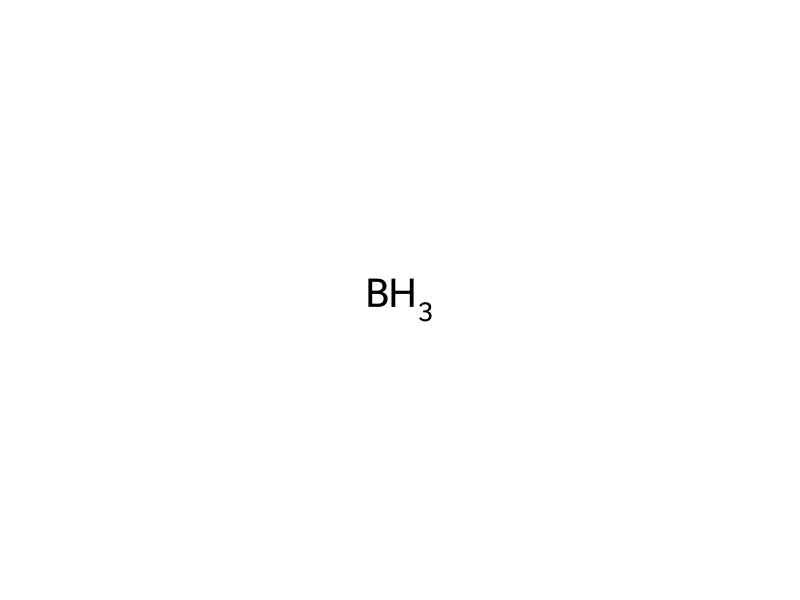
Reagents, catalysts & solvents 2

Conditions
- Temperature
- 35 °C
Procedure
A mixture of (S)-1-carboxymethyl-3-(5-chloroindole-2-carbonylamino)-3,4-dihydrocarbostyril (Example 10) (6 mg) in 1.0 M borane in tetrahydrofuran solution (2 mL) under argon was stirred at 35° C. for 3 h. After cooling to room temperature, 1.0 M aqueous hydrochloric acid (10 mL) and ethyl acetate (10 mL) were added. This mixture was stirred for 3 h before the layers were separated. The organic phase was washed with water (10 mL three times) and evaporated under vacuum. The residue was chromatographed on reverse phase preparative HPLC to isolate the title compound (1.1 mg) and the over-reduction product (S)-1-(2-hydroxyethyl)-3-(5-chloroindole-2-carbonylamino)-1,2,3,4-tetrahydroquinoline (0.9 mg). Title compound HPLC/MS [M+H]+, 384.
Workup
- temperatureAfter cooling to room temperature
- stirringThis mixture was stirred for 3 h before the layers
- customwere separated
- washThe organic phase was washed with water (10 mL three times)
- customevaporated under vacuum
- customThe residue was chromatographed on reverse phase preparative HPLC
Sources & evidence
- ORD record
- ord-bf20d91f30184015b1d641e471e53644
- Source dataset
- uspto-grants-2006_06
- Patent number
- US07057046B2
Reaction notes
Loading…