Hydroquinone → 1,4-Bis(decyloxy)benzene
Reaction equation

[C:1]1([CH:8]=[CH:7][C:5]([OH:6])=[CH:4][CH:3]=1)O.Br[CH2:10][CH2:11][CH2:12][CH2:13][CH2:14][CH2:15][CH2:16][CH2:17][CH2:18][CH3:19].[C:20](=[O:23])([O-])[O-].[K+].[K+].[C:26](#N)[CH3:27]>O>[CH2:10]([O:6][C:5]1[CH:7]=[CH:8][C:1]([O:23][CH2:20][CH2:10][CH2:11][CH2:12][CH2:13][CH2:14][CH2:15][CH2:16][CH2:26][CH3:27])=[CH:3][CH:4]=1)[CH2:11][CH2:12][CH2:13][CH2:14][CH2:15][CH2:16][CH2:17][CH2:18][CH3:19]Participants
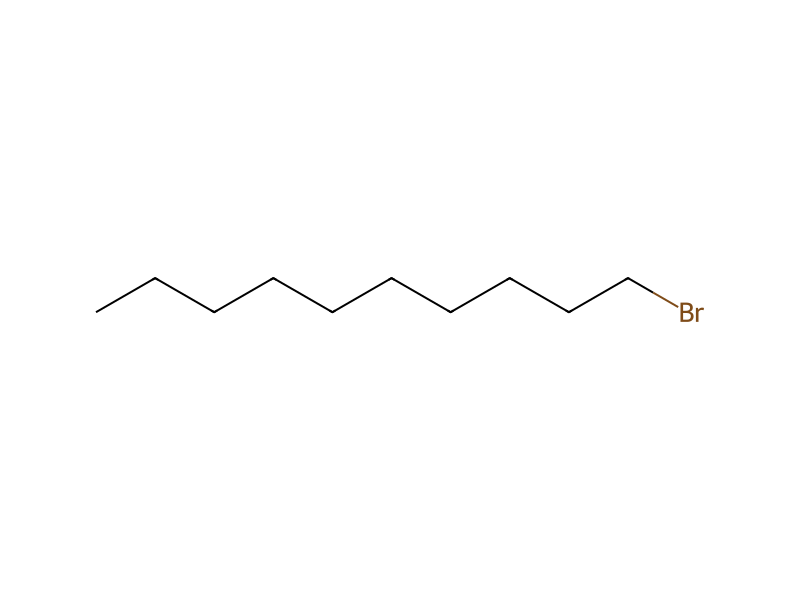
Reactant 4



Product 1

Reagents, catalysts & solvents 1

Procedure
A 3 liter round bottom flask was charged with hydroquinone (75 g, 0.681 moles), bromodecane (461 g, 2.08 moles), potassium carbonate (290 g, 2.09 moles), and acetonitrile (1500 mL). The flask was fitted with a mechanical stirrer and two reflux condensers. The flask was heated with stirring under nitrogen for 3 days. The flask was allowed to cool to ambient temperature, and water (2 liters) was added. The resulting solids were broken up by being shaken with water. The collected solids were air dried and then dissolved in hot heptane (2000 mL). The hot clear heptane solution was added to CH3OH (3 liters), and a colorless flocculant solid formed. The solid was collected, air dried and was suitable for use directly in the next step. 1H NMR was consistent with the proposed structure.
Workup
- customThe flask was fitted with a mechanical stirrer
- temperaturetwo reflux condensers
- temperatureThe flask was heated
- customdried
- dissolutiondissolved in hot heptane (2000 mL)
- additionThe hot clear heptane solution was added to CH3OH (3 liters)
- customa colorless flocculant solid formed
- customThe solid was collected
- customair dried
Sources & evidence
- ORD record
- ord-9ca2f4d2cf5741bb9f8c8307edcdc36f
- Source dataset
- uspto-grants-2006_06
- Patent number
- US07060419B2
Reaction notes
Loading…