Triethylamine → HCID 754129, compound
Reaction equation

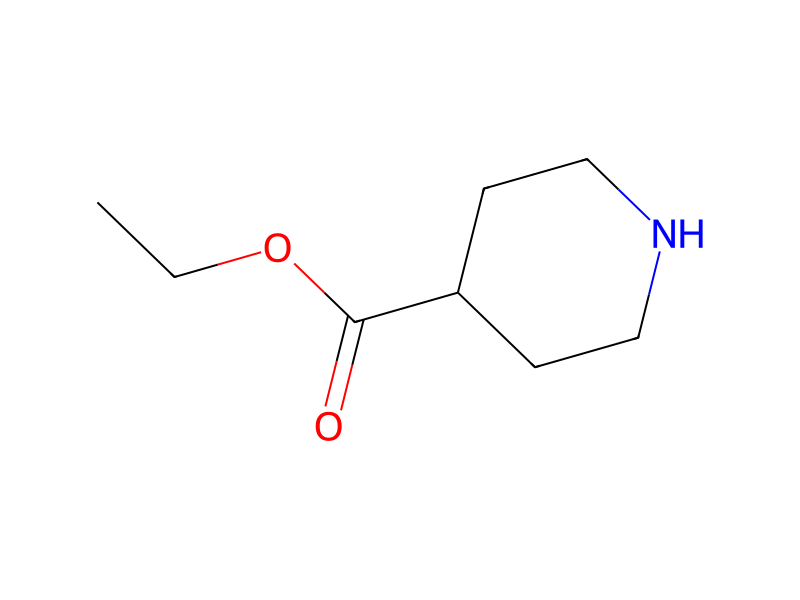
[Cl:1][C:2]1[CH:3]=[C:4]([CH:7]=[CH:8][C:9]=1[Cl:10])[CH2:5]Br.[NH:11]1[CH2:21][CH2:20][CH:14]([C:15]([O:17][CH2:18][CH3:19])=[O:16])[CH2:13][CH2:12]1.C(N(CC)CC)C>C(Cl)Cl.C(OCC)(=O)C>[Cl:1][C:2]1[CH:3]=[C:4]([CH:7]=[CH:8][C:9]=1[Cl:10])[CH2:5][N:11]1[CH2:12][CH2:13][CH:14]([C:15]([O:17][CH2:18][CH3:19])=[O:16])[CH2:20][CH2:21]1Participants
6





Procedure
3,4-Dichlorobenzyl bromide (1.83 g, 7.63 mmol) was added to a solution of ethyl isonipecotate (1 g, 6.36 mmol) and triethylamine (1.33 ml, 9.54 mmol) in methylene chloride solution (10 ml) at room temperature. After 17 h, the reaction mixture was diluted with ethyl acetate and washed with aqueous sodium bicarbonate solution (10 ml). The organic layer was dried over magnesium sulfate, filtered, and concentrated. Flash chromatography with 9:1, hexanes/ethyl acetate followed by 6:1 hexanes/ethyl acetate gave ethyl 1-(3,4-dichlorobenzyl)isonipecotate (1.78 g) as a pale yellow oil.
Workup
- washwashed with aqueous sodium bicarbonate solution (10 ml)
- dry with materialThe organic layer was dried over magnesium sulfate
- filtrationfiltered
- concentrationconcentrated
Sources & evidence
- ORD record
- ord-bcc8bb4d7c814addb7d03a9a70bb5e02
- Source dataset
- uspto-grants-2004_08
- Patent number
- US06770650B2
Reaction notes
Loading…