Triphenylphosphine → HCID 23448408, compound
Reaction equation

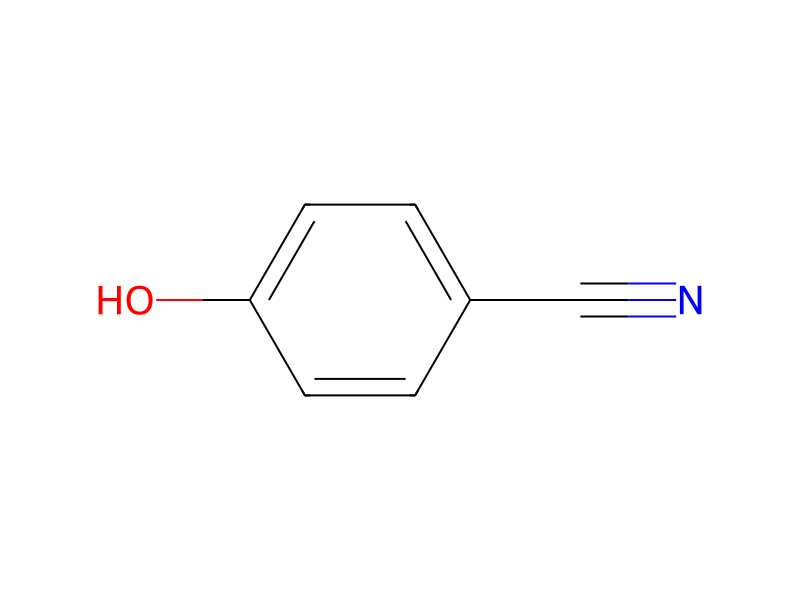
N(C(OCC)=O)=NC(OCC)=O.[OH:13][C:14]1[CH:21]=[CH:20][C:17]([C:18]#[N:19])=[CH:16][CH:15]=1.[Cl:22][CH2:23][CH2:24][CH2:25][CH2:26][CH2:27][CH2:28][CH2:29][CH2:30]O.C1(P(C2C=CC=CC=2)C2C=CC=CC=2)C=CC=CC=1>O.O1CCCC1>[Cl:22][CH2:23][CH2:24][CH2:25][CH2:26][CH2:27][CH2:28][CH2:29][CH2:30][O:13][C:14]1[CH:21]=[CH:20][C:17]([C:18]#[N:19])=[CH:16][CH:15]=1Participants
7






Procedure
A solution of diethyl azodicarboxylate (7.3 g; 42 mmol) and tetrahydrofuran (15 ml) was added dropwise at 0° C. to a solution of 4-hydroxybenzonitrile (4.2 g; 35 mmol), 8-chloro-1-octanol (6.9 g; 42 mmol), triphenylphosphine (11.0 g; 42 mmol) and tetrahydrofuran (70 ml) and stirred at room temperature overnight. The reaction mixture was added to water (200 ml) and extracted with ethyl acetate (3×100 ml), dried over magnesium sulphate and filtered. The solvent was then removed in vacuo. The residue was purified by column flash chromatography on silica gel using toluene/ethyl acetate (97:3) as eluent, to give 8.8 g (94%) of p-[(8-chlorooctyl)oxy]benzonitrile.
Workup
- extractionextracted with ethyl acetate (3×100 ml)
- dry with materialdried over magnesium sulphate
- filtrationfiltered
- customThe solvent was then removed in vacuo
- customThe residue was purified by column flash chromatography on silica gel
Sources & evidence
- ORD record
- ord-71965819f0fa43da846f36059c518f7c
- Source dataset
- uspto-grants-2004_01
- Patent number
- US06676851B1
Reaction notes
Loading…