2,6-Lutidine → L-Lysine
Reaction equation

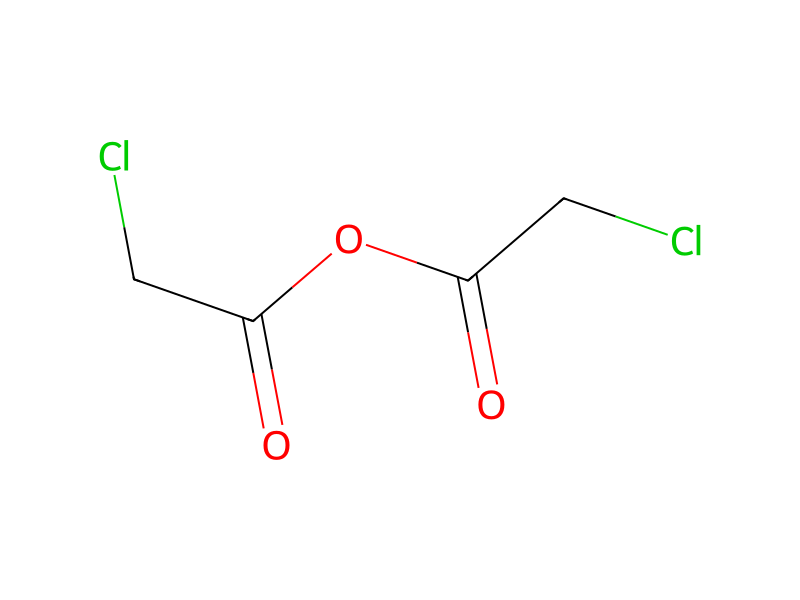
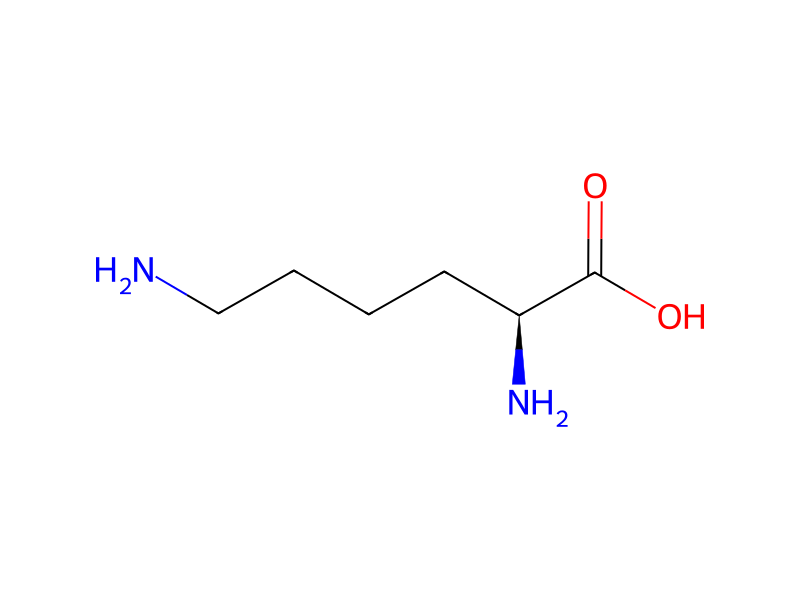
Br.[NH2:2][C@H:3]([C:9]([OH:11])=[O:10])[CH2:4][CH2:5][CH2:6][CH2:7][NH2:8].N1C(C)=CC=CC=1C.ClCC(OC(=O)CCl)=O>CN(C)C=O>[NH2:2][C@H:3]([C:9]([OH:11])=[O:10])[CH2:4][CH2:5][CH2:6][CH2:7][NH2:8]Participants
5
Reactant 3


Product 1
Reagents, catalysts & solvents 1

Conditions
- Temperature
- 0 °C
Procedure
250 mg (1.19 mmol) of poly-D/L-lysine hydrobromide (SIGMA; M: 30,000-70,000) are suspended in 4 ml of dimethylformamide under argon. The suspension is cooled down to 0° C. and 1.25 ml of 2,6-lutidine are added. A solution of 500 mg (2.93 mmol) of chloroacetic anhydride in 2 ml of dimethylformamide is added dropwise over the space of 15 min. The mixture is subsequently heated slowly to room temperature and stirred for 16 h. The working-up and purification take place in analogy with N(6)-chloroacetyl-poly-L-lysine. 210 mg (85%) of N(6)-chloroacetyl-poly-D/L-lysine B3 are obtained.
Workup
- temperatureThe mixture is subsequently heated slowly to room temperature
- custompurification
Sources & evidence
- ORD record
- ord-1809b6b3672a432283cf0d86c0d65563
- Source dataset
- uspto-grants-2004_01
- Patent number
- US06677164B1
Reaction notes
Loading…