Sodium Carbonate → HCID 86590138, compound
Reaction equation

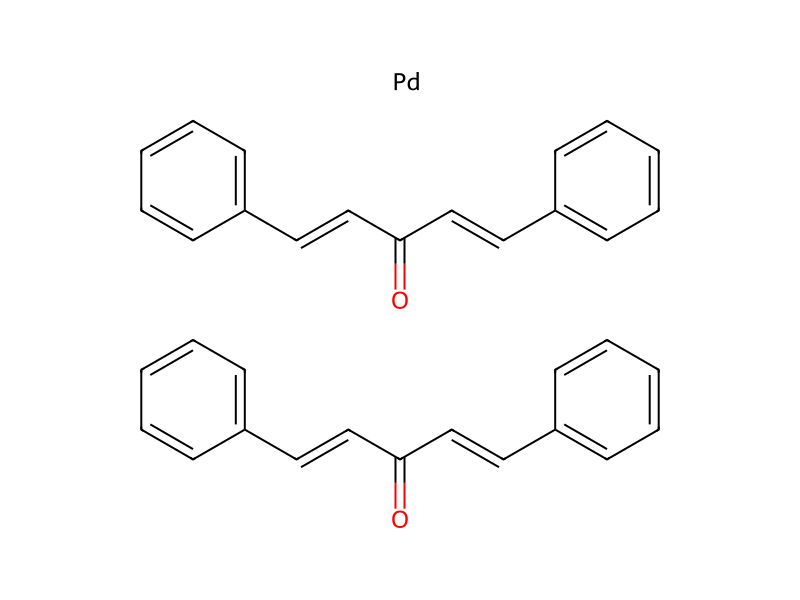
Br[C:2]1[CH:3]=[N:4][CH:5]=[C:6]([Br:16])[C:7]=1[NH:8][C:9](=[O:15])[O:10][C:11]([CH3:14])([CH3:13])[CH3:12].[C:17]1(B(O)O)[CH:22]=[CH:21][CH:20]=[CH:19][CH:18]=1.C(=O)([O-])[O-].[Na+].[Na+]>O1CCOCC1.O.C(OCC)(=O)C.C1C=CC(/C=C/C(/C=C/C2C=CC=CC=2)=O)=CC=1.C1C=CC(/C=C/C(/C=C/C2C=CC=CC=2)=O)=CC=1.[Pd]>[Br:16][C:6]1[CH:5]=[N:4][CH:3]=[C:2]([C:17]2[CH:22]=[CH:21][CH:20]=[CH:19][CH:18]=2)[C:7]=1[NH:8][C:9](=[O:15])[O:10][C:11]([CH3:14])([CH3:13])[CH3:12]Participants
Reactant 3



Product 1

Reagents, catalysts & solvents 4



Conditions
- Temperature
- 70 °C
Procedure
A mixture of 1,1-dimethylethyl (3,5-dibromo-4-pyridyl)carbamate (4.2 g; 12.0 mmol), phenylboronic acid (1.76 g; 14.4 mmol), sodium carbonate (3.1 g; 29.2 mmol) and tetrakis(triphenylphosphine)palladium (0) (0.416 g; 0.36 mmol) in dioxane (24 ml) and water (12 ml) is heated at 70° C. under argon for 8 hours. The reaction mixture is concentrated under reduced pressure. The residue obtained is taken up in ethyl acetate (200 ml), washed with water (2×100 ml) and brine (100 ml), dried over sodium sulphate, filtered and then concentrated under reduced pressure. The residue is chromatographed on a column of silica, eluting with an ethyl acetate/cyclohexane gradient of from 0 to 5%. 2.3 g of 1,1-dimethylethyl (3-bromo-5-phenylpyrid-4-yl)carbamate are isolated in the form of a white solid.
Workup
- concentrationThe reaction mixture is concentrated under reduced pressure
- customThe residue obtained
- washwashed with water (2×100 ml) and brine (100 ml)
- dry with materialdried over sodium sulphate
- filtrationfiltered
- concentrationconcentrated under reduced pressure
- customThe residue is chromatographed on a column of silica
- washeluting with an ethyl acetate/cyclohexane gradient of from 0 to 5%
Sources & evidence
- ORD record
- ord-3cec82aa3f034cc1ba8432d6388d77e9
- Source dataset
- uspto-grants-2004_01
- Patent number
- US06680329B2
Reaction notes
Loading…