Ethyl Acetate → Ethyl 3-(1,5-naphthyridin-2-yl)prop-2-enoate
Reaction equation

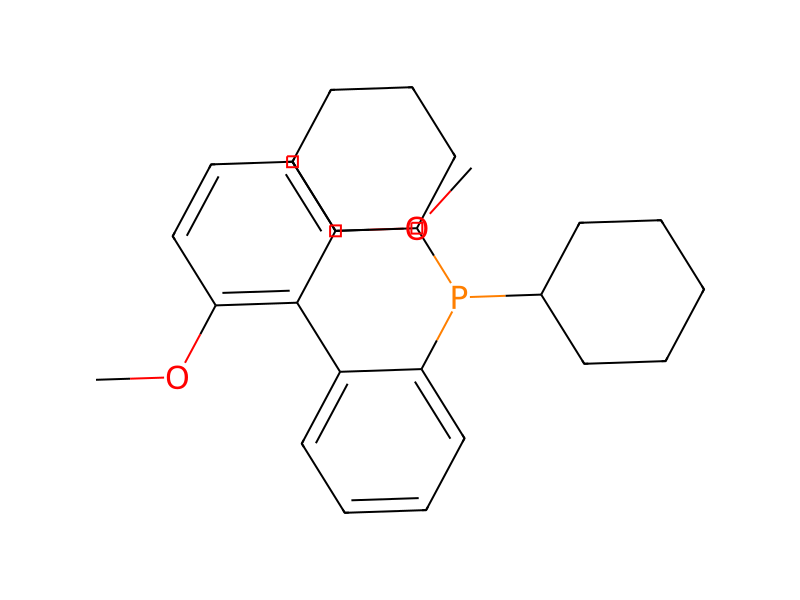
Cl[C:2]1[CH:11]=[CH:10][C:9]2[C:4](=[CH:5][CH:6]=[CH:7][N:8]=2)[N:3]=1.[CH3:12]OC1C=CC=C(OC)C=1C1C=CC=CC=1P(C1CCCCC1)C1CCCCC1.[O-]P([O-])([O-])=O.[K+].[K+].[K+].[CH3:49][CH2:50][O:51][C:52]([CH3:54])=[O:53]>C1COCC1.O>[N:3]1[C:4]2[C:9](=[N:8][CH:7]=[CH:6][CH:5]=2)[CH:10]=[CH:11][C:2]=1[CH:12]=[CH:54][C:52]([O:51][CH2:50][CH3:49])=[O:53]Participants
Reactant 4



Product 1

Reagents, catalysts & solvents 2


Conditions
- Temperature
- 100 °C
Procedure
2-chloro-1,5-naphthyridine (101 mg, 0.614 mmol), boronate ester B1 (195 mg, 0.920 mmol), S-Phos (25.2 mg, 0.061 mmol), K3PO4 (391 mg, 1.841 mmol) and PdOAc2 (6.89 mg, 0.031 mmol) were combined in a 5-mL microwave vial in THF (2.5 mL) and water (500 μl). The reaction mixture was heated at 100° C. for 15 min. The reaction mixture was diluted with EtOAc (20 mL), washed with sat. aq. NaHCO3 (25 mL) and brine (25 mL), dried over MgSO4, filtered, and concentrated in vacuo. The resulting residue was purified by gradient elution on silica gel (10 to 100% EtOAc in hexanes) to afford the title compound as a pale orange solid (118 mg, 90%). 1H NMR (500 MHz, DMSO): δ 9.02 (dd, J=4.1, 1.6 Hz, 1H), 8.48 (d, J=8.8 Hz, 1H), 8.48-8.42 (m, 1H), 8.25 (d, J=8.7 Hz, 1H), 7.84-7.79 (m, 2H), 7.13 (d, J=16.0 Hz, 1H), 4.25 (q, J=7.1 Hz, 2H), 1.30 (t, J=7.1 Hz, 3H) ppm; LRMS m/z (M+H) 229.2 found, 229.1 required.
Workup
- washwashed with sat. aq. NaHCO3 (25 mL) and brine (25 mL)
- dry with materialdried over MgSO4
- filtrationfiltered
- concentrationconcentrated in vacuo
- customThe resulting residue was purified by gradient elution on silica gel (10 to 100% EtOAc in hexanes)
Sources & evidence
- ORD record
- ord-711a7808bd5943c4a8fda48a099e0822
- Source dataset
- uspto-grants-2015_02
- Patent number
- US08957077B2
Reaction notes
Loading…