2-Amino-5-(trifluoromethyl)pyridine → HCID 13023075, compound
Reaction equation

[Cl:1][C:2]1[CH:12]=[CH:11][CH:10]=[C:9]([Cl:13])[C:3]=1[C:4]([N:6]=[C:7]=[O:8])=[O:5].[F:14][C:15]([F:24])([F:23])[C:16]1[CH:17]=[CH:18][C:19]([NH2:22])=[N:20][CH:21]=1>C(OCC)(=O)C>[Cl:1][C:2]1[CH:12]=[CH:11][CH:10]=[C:9]([Cl:13])[C:3]=1[C:4]([NH:6][C:7]([NH:22][C:19]1[CH:18]=[CH:17][C:16]([C:15]([F:23])([F:14])[F:24])=[CH:21][N:20]=1)=[O:8])=[O:5]Participants
4
Reactant 2
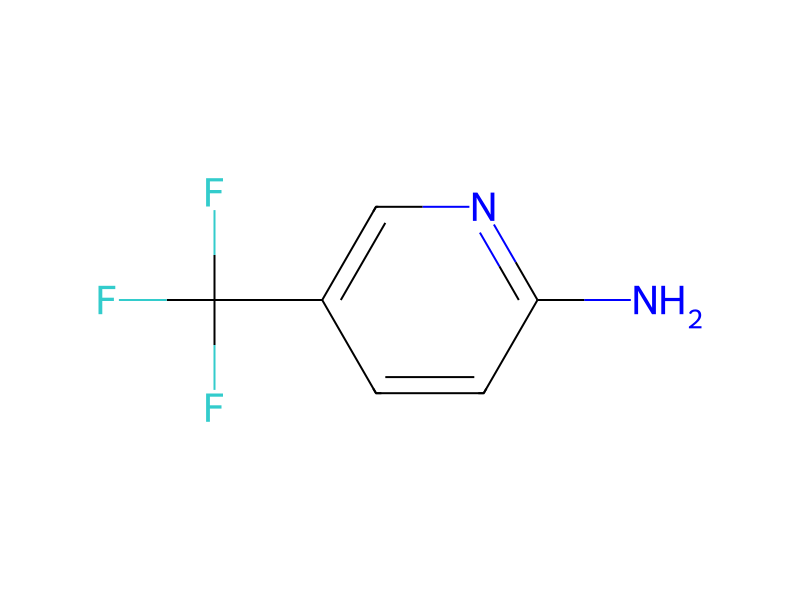

Product 1

Reagents, catalysts & solvents 1

Procedure
2,6-Dichlorobenzoyl isocyanate (1.1 grams; 0.005 mole) and 5-(trifluoromethyl)-2-aminopyridine (800 mg; 0.005 mole) were mixed in 50 ml. of ethyl acetate at room temperature and stirred overnight (about 18 hours) at room temperature. Solvent was then evaporated and the product recrystallized from ethanol, m.p. 228°-230° C., yield 200 mg. Elemental analysis showed:
Workup
- customSolvent was then evaporated
- customthe product recrystallized from ethanol, m.p. 228°-230° C., yield 200 mg
Sources & evidence
- ORD record
- ord-9a762a3229954e8399cac1931635a0ca
- Source dataset
- uspto-grants-1980_08
- Patent number
- US04219557
Reaction notes
Loading…