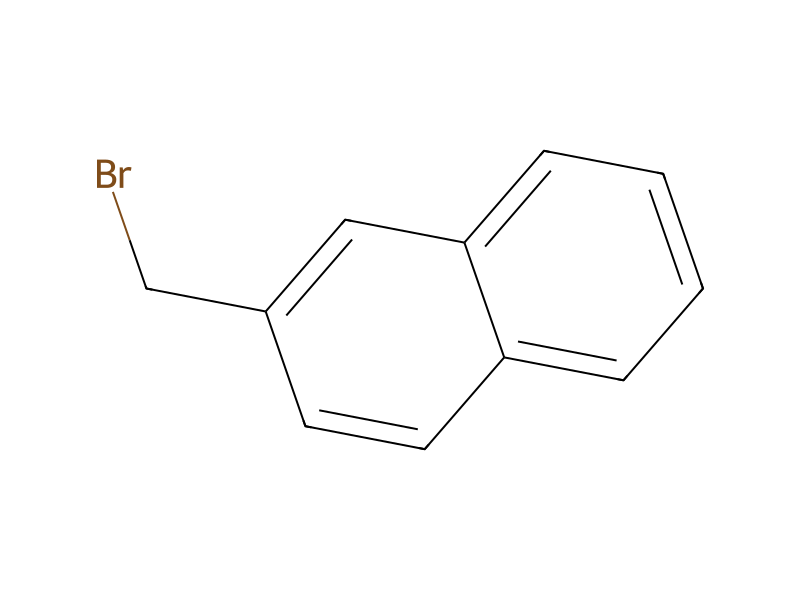
Dichloromethane → 2-Bromomethylnaphthalene
Reaction equation

[CH:1]12[O:7][CH:6]1[CH2:5][CH2:4][N:3]([C:8]([O:10][CH2:11][C:12]1[CH:17]=[CH:16][CH:15]=[CH:14][CH:13]=1)=O)[CH2:2]2.[Br:18][C:19]1[CH:24]=[CH:23][C:22]([OH:25])=[CH:21][CH:20]=1.[CH2:26](Cl)Cl>C(OCC)(=O)C>[Br:18][C:19]1[CH:24]=[CH:23][C:22]([O:25][CH:6]2[CH2:5][CH2:4][N:3]([C:8](=[O:10])[CH2:11][C:12]3[CH:17]=[CH:16][CH:15]=[CH:14][CH:13]=3)[CH2:2][CH:1]2[OH:7])=[CH:21][CH:20]=1.[Br:18][CH2:19][C:24]1[CH:23]=[CH:11][C:12]2[C:13](=[CH:14][CH:15]=[CH:16][CH:17]=2)[CH:26]=1Participants
6





Procedure
In an analogous manner to that described in Example 71(a)-(b), from benzyl rac-3-aza-7-oxa-bicyclo[4.1.0]heptane-3-carboxylate by reaction with 4-bromophenol there was obtained (3RS,4RS)-1-[4-(4-bromo-phenoxy)-3-hydroxy-piperidin-1-yl]-2-phenyl-ethanone as a colourless solid [Rf : 0.40 (SiO2, methylene chloride:ethyl acetate=2:1)], alkylation of which with 2-bromomethylnaphthalene gave benzyl (3RS,4RS)-4-(4-bromo-phenyl)-3-(naphthalen-2-ylmethoxy)-piperidine-1-carboxylate as a colourless solid; MS: 454, 456 (M-benzyl)+.
Sources & evidence
- ORD record
- ord-2d9af37e652d4f2086cba82ce10a74ca
- Source dataset
- uspto-grants-2000_11
- Patent number
- US06150526
Reaction notes
Loading…