5-Fluorouracil → HCID 10177049, compound
Reaction equation

F[C:2]1[C:3](=S)[NH:4][C:5](=O)[NH:6][CH:7]=1.F[C:11]1[C:12](=O)[NH:13]C(=O)[NH:15][CH:16]=1.FC1C=NC(=O)NC=1.C[S:28]([C:31]1N=CC(F)=CN=1)(=[O:30])=[O:29].P(Cl)(Cl)(Cl)=O.C[S-].[Na+].Cl[C:47]1[CH:52]=[CH:51][CH:50]=[C:49](C(OO)=O)[CH:48]=1.NN.O.NN.CS(C1N=CC(NN)=CN=1)(=O)=O.[F:74][C:75]([F:88])([F:87])C(=O)CC(C1C=CC=CC=1)=O>C(O)C>[CH3:31][S:28]([C:5]1[N:4]=[CH:3][C:2]([N:13]2[C:12]([C:47]3[CH:52]=[CH:51][CH:50]=[CH:49][CH:48]=3)=[CH:11][C:16]([C:75]([F:88])([F:87])[F:74])=[N:15]2)=[CH:7][N:6]=1)(=[O:29])=[O:30]Participants
Reactant 11
 HCID 33855-Fluorouracil
 HCID 9321Hydrazine
 HCID 24654Hydrazine hydrate (1:1)
 HCID 24813Phosphorus oxychloride
 HCID 675894,4,4-Trifluoro-1-phenyl-1,3-butanedione
 HCID 70297m-Chloroperbenzoic acid
 HCID 1014985-Fluoropyrimidin-2-one2×
 HCID 5663795-Fluoro-2-methylsulfonylpyrimidine2×
 HCID 27812135-Fluoro-4-thiouracil
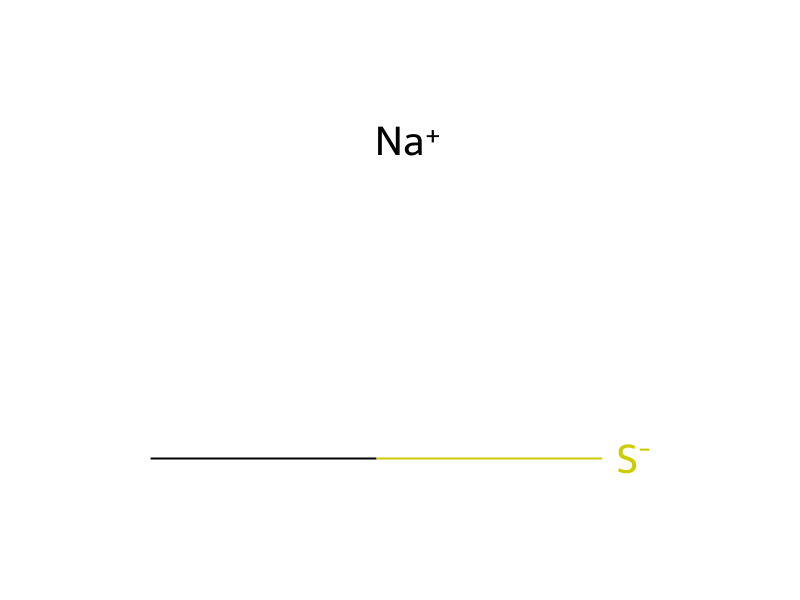 HCID 4378561Sodium methanethiolate
 HCID 12509326HCID 12509326, compound
Product 1

Reagents, catalysts & solvents 1

Procedure
5-Fluoro-4-thiouracil can be prepared from 5-fluorouracil as described (J. Med. Chem., Vol. 6, pp. 697-701 (1963)). 5-Fluoro-2(1H)-pyrimidinone can be subsequently prepared as described (Acta Chem. Scand., Vol. 23, pp. 294-299 (1969)). 5-Fluoro-2(1H)-pyrimidinone can then be converted to 2-methanesulfonyl-5-fluoropyrimidine by treatment with phosphorus oxychloride, followed by reaction with sodium methanethiolate and oxidation with m-chloroperbenzoic acid as described (Acta Chem. Scand., Vol. B39, pp. 696-696 (1985)). Conversion to the hydrazine is then effected by treatment of 2-methylsulfonyl-5-fluoropyrimidine with hydrazine hydrate in ethanol (Coll. Czech. Chem. Commun., Vol. 37, pp. 1721-17330 (1972)). Subsequent reaction of 2-methylsulfonyl-5-hydrazinopyrimidine with 4,4,4-trifluoro-1-phenyl-1,3-butanedione will then produce the title compound.
Sources & evidence
- ORD record
- ord-1d382a67255843e1abbfefb43019cb3c
- Source dataset
- uspto-grants-2003_03
- Patent number
- US06531492B1
Reaction notes
Loading…