Hydrochloric Acid → HCID 57974745, compound
Reaction equation

Br[C:2]1[CH:7]=[CH:6][C:5]([C:8]2[CH:13]=[CH:12][CH:11]=[CH:10][C:9]=2[C:14]#[N:15])=[CH:4][CH:3]=1.[B:16](OC(C)C)([O:21]C(C)C)[O:17]C(C)C.C(=O)=O.CC(C)=O.C([Li])CCC.Cl>O1CCCC1>[C:14]([C:9]1[CH:10]=[CH:11][CH:12]=[CH:13][C:8]=1[C:5]1[CH:6]=[CH:7][C:2]([B:16]([OH:21])[OH:17])=[CH:3][CH:4]=1)#[N:15]Participants



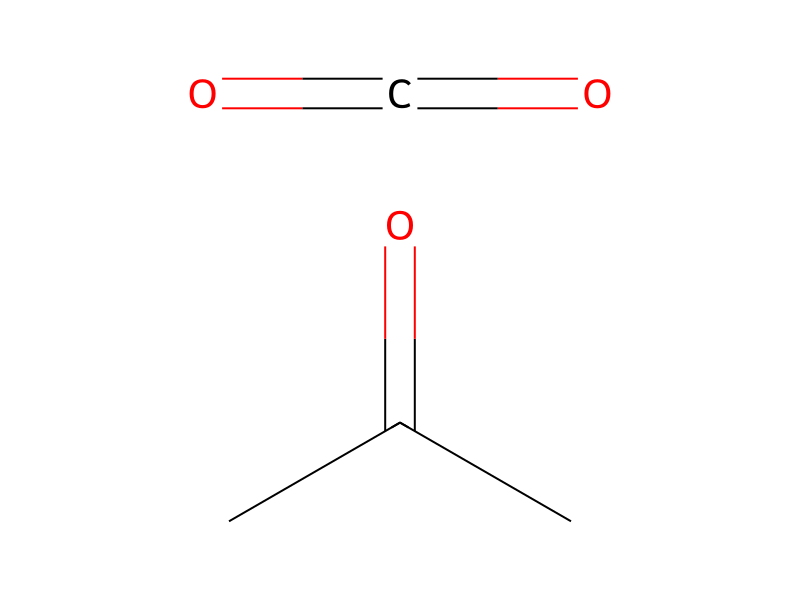



Conditions
- Temperature
- -73 °C
Procedure
Add 2-(4-bromophenyl)benzenecarbonitrile (1.29 g, 0.005 moles, preparation 61), tetrahydrofuran (52 mL), and triisopropyl borate (2.82 grams, 0.015 moles) to a 100 mL 3-neck round-bottom flask equipped with a magnetic stirrer, internal temperature probe, dry ice-acetone bath, and addition funnel. Stir the mixture under nitrogen and cool the contents of the 100 mL 3-neck round-bottom flask to −73° C. Transfer a solution of n-butyl lithium 1.6 M in hexanes (8.7 mL, 0.0139 moles) via cannula to the addition funnel. Add n-butyl lithium (4.7 mL, 0.0075 moles) to the reaction mixture over 7 minutes while maintaining −65 to −73° C. Slowly warm the reaction mixture to −15° C. Cool the reaction mixture to −70° C. Add n-butyl lithium (3.0 mL, 0.0048 moles) to the reaction mixture dropwise. Slowly warm the reaction mixture to −15° C. Cool the reaction mixture to −60° C. Add n-butyl lithium (1.0 mL, 0.0016 moles) to the reaction mixture dropwise. Slowly warm the reaction mixture to −15° C. Cool the reaction mixture to −30° C. Add 1.0 N hydrochloric acid (20 mL, 0.02 moles). Remove the dry ice-acetone bath, and allow the reaction mixture to warm to 23° C. Transfer the reaction m mixture to a separatory funnel. Separate the phases and concentrate the organic phase to a solid under reduced pressure (15-25 mm). Add water (50 mL), 5N NaOH until pH 11.5 is observed, dichloromethane (40 mL), and tetrahydrofuran (20 mL). Transfer the reaction mixture to a separatory funnel and separate the phases. Acidify the aqueous phase and concentrate the suspension under reduced pressure (15-25 mm) to remove residual organic solvents. Collect the precipitate by filtration. Vacuum (15-25 mm) dry the filter cake at 45° C. to provide the title compound (0.30 g, 0.0013 moles) in 26.9% yield. 1H NMR (DMSO-d6, 500.0 MHz): δ 8.21 (s, 2H); 7.98 (dd, 1H, J=1.5, 8); 7.95 (d, 2H, J=8); 7.82 (dt, 1H, J=1.5, 7.5); 7.66 (d, 1H, J=7); 7.61 (dt, 1H, J=1, 8); 7.57 (d, 2H, J=8).
Workup
- customequipped with a magnetic stirrer
- temperatureSlowly warm the reaction mixture to −15° C
- temperatureCool the reaction mixture to −70° C
- temperatureSlowly warm the reaction mixture to −15° C
- temperatureCool the reaction mixture to −60° C
- temperatureSlowly warm the reaction mixture to −15° C
- temperatureCool the reaction mixture to −30° C
- customRemove the dry ice-acetone bath
- temperatureto warm to 23° C
- customSeparate the phases
- concentrationconcentrate the organic phase to a solid under reduced pressure (15-25 mm)
- customTransfer the reaction mixture to a separatory funnel and separate the phases
- concentrationconcentrate the suspension under reduced pressure (15-25 mm)
- customto remove residual organic solvents
- customCollect the precipitate
- filtrationby filtration
- customVacuum (15-25 mm) dry the filter cake at 45° C.
Sources & evidence
- ORD record
- ord-5ece24dc9d934cbe949d6f47ccdc4b57
- Source dataset
- uspto-grants-2009_12
- Patent number
- US07625932B2
Reaction notes
Loading…