Hydrochloric Acid → HCID 21200443, compound
Reaction equation

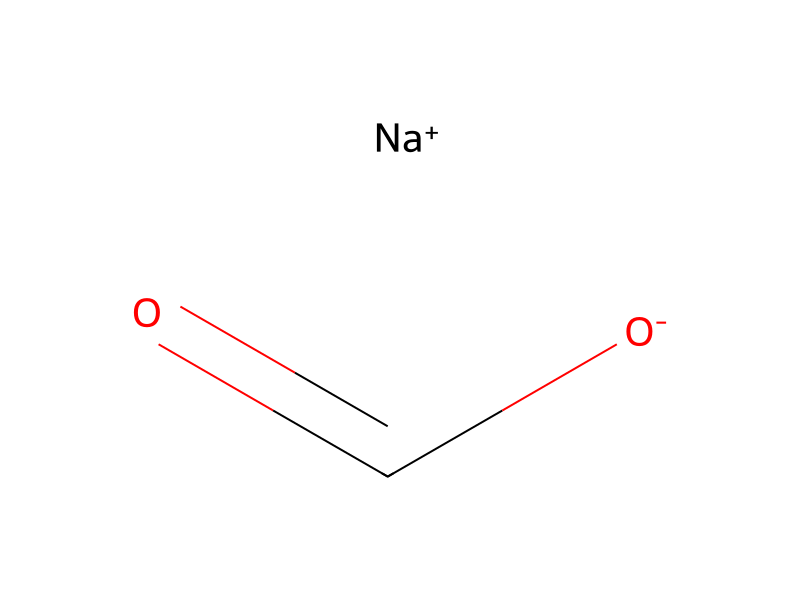
[Cl:1][C:2]1[CH:7]=[C:6]([F:8])[C:5](I)=[CH:4][C:3]=1[O:10][CH:11]([CH3:13])[CH3:12].[CH:14]([O-])=[O:15].[Na+].Cl>CN(C)C=O.Cl[Pd](Cl)([P](C1C=CC=CC=1)(C1C=CC=CC=1)C1C=CC=CC=1)[P](C1C=CC=CC=1)(C1C=CC=CC=1)C1C=CC=CC=1>[Cl:1][C:2]1[C:3]([O:10][CH:11]([CH3:13])[CH3:12])=[CH:4][C:5]([CH:14]=[O:15])=[C:6]([F:8])[CH:7]=1Participants
6





Procedure
Then, 62.9 g of 2-chloro-4-fluoro-5-iodo-1-isopropoxybenzene, 20.4 g of sodium formate, and 2.81 g of dichlorobis(triphenylphosphine)palladium were dissolved in 120 ml of N,N-dimethylformamide, which was stirred at 90° to 100° C. for 12 hours, while bubbling carbon monoxide thereinto. After completion of the reaction, the reaction mixture was cooled to room temperature, to which diluted hydrochloric acid was added, and the mixture was extracted with ethyl acetate. The organic layer was washed with saturated sodium chloride solution, dried, and concentrated. The residue was subjected to silica gel column chromatography, which afforded 15 g of 4-chloro-2-fluoro-5-isopropoxybenzaldehyde.
Workup
- customwhile bubbling carbon monoxide
- customAfter completion of the reaction
- additionwas added
- extractionthe mixture was extracted with ethyl acetate
- washThe organic layer was washed with saturated sodium chloride solution
- customdried
- concentrationconcentrated
Sources & evidence
- ORD record
- ord-cd8eb0c83abe4bfc84f57781bb2dd4d2
- Source dataset
- uspto-grants-2000_08
- Patent number
- US06100257
Reaction notes
Loading…