Water → N-trityl-1,3-dihydroxy-2-propanamine
Reaction equation

[NH2:1][CH:2]([CH2:5][OH:6])[CH2:3][OH:4].[C:7](Cl)([C:20]1[CH:25]=[CH:24][CH:23]=[CH:22][CH:21]=1)([C:14]1[CH:19]=[CH:18][CH:17]=[CH:16][CH:15]=1)[C:8]1[CH:13]=[CH:12][CH:11]=[CH:10][CH:9]=1.C(N(CC)CC)C.O>CN(C=O)C>[C:8]1([C:7]([C:14]2[CH:15]=[CH:16][CH:17]=[CH:18][CH:19]=2)([C:20]2[CH:21]=[CH:22][CH:23]=[CH:24][CH:25]=2)[NH:1][CH:2]([CH2:5][OH:6])[CH2:3][OH:4])[CH:9]=[CH:10][CH:11]=[CH:12][CH:13]=1Participants
6
Reactant 4

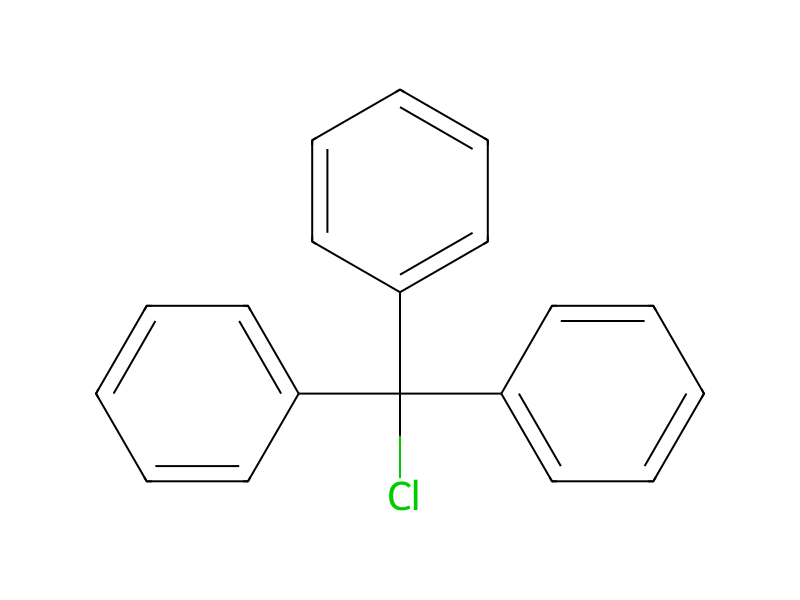


Product 1

Reagents, catalysts & solvents 1

Procedure
Part A: Serinol (24 g) was added to a solution of trityl chloride (65 g) and triethylamine (51.0 g) in 600 mL of dry DMF. After stirring at room temperature for 48 h, the reaction was poured into water and extracted several times with diethyl ether. The combined organic layers were dried over anhydrous magnesium sulfate and concentrated to dryness to afford N-triphenylmethylserinol (71.0 g).
Workup
- extractionextracted several times with diethyl ether
- dry with materialThe combined organic layers were dried over anhydrous magnesium sulfate
- concentrationconcentrated to dryness
Sources & evidence
- ORD record
- ord-429cfd9f4b9c4f54aabeb348e8cecd62
- Source dataset
- uspto-grants-2000_08
- Patent number
- US06107300
Reaction notes
Loading…