Sodium hydride → HCID 67309163, compound
Reaction equation

[H-].[Na+].[CH3:3][O:4][C:5]([C:7]1[C:19]2[C:18]3[C:13](=[CH:14][CH:15]=[CH:16][CH:17]=3)[NH:12][C:11]=2[CH:10]=[CH:9][CH:8]=1)=[O:6].[Br:20][C:21]1[CH:28]=[C:27](F)[CH:26]=[CH:25][C:22]=1[C:23]#[N:24]>CN(C)C=O>[CH3:3][O:4][C:5]([C:7]1[C:19]2[C:18]3[C:13](=[CH:14][CH:15]=[CH:16][CH:17]=3)[N:12]([C:27]3[CH:26]=[CH:25][C:22]([C:23]#[N:24])=[C:21]([Br:20])[CH:28]=3)[C:11]=2[CH:10]=[CH:9][CH:8]=1)=[O:6]Participants
Reactant 3

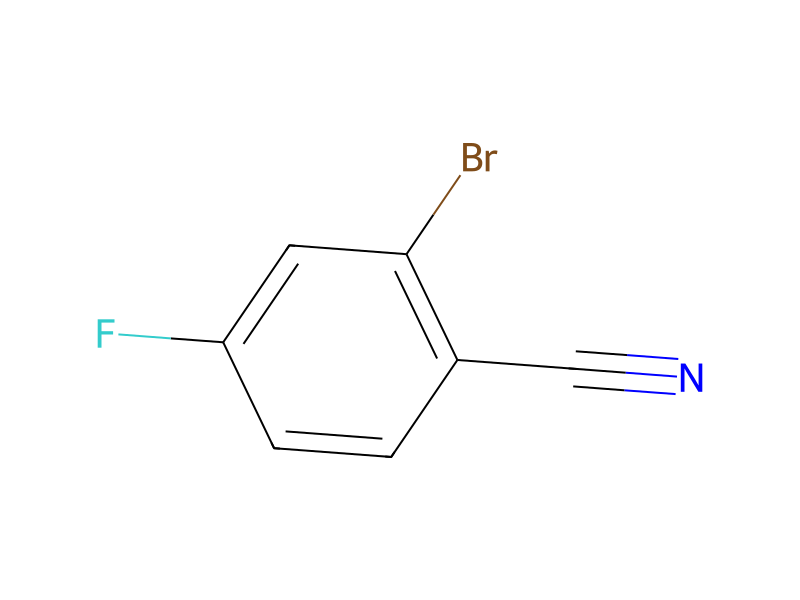

Product 1

Reagents, catalysts & solvents 1

Procedure
In a 250 ml round-bottomed flask under argon, 391 mg of a suspension of sodium hydride at 60% in petroleum jelly are added at ambient temperature, in 4 stages, in ½ hour, to a solution of 2.0 g of 9H-carbazole-4-carboxylic acid methyl ester obtained according to the preceding stage and of 1.95 g of 2-bromo-4-fluorobenzonitrile in 50 ml of dimethylformamide. The mixture is stirred at ambient temperature for 3 hours. The reaction medium is evaporated to dryness under vacuum and the residue is chromatographed on silica gel (40-63 μm), elution being carried out with a mixture of dichloromethane and cyclohexane (50:50). 3.2 g of 9-(3-bromo-4-cyanophenyl)-9H-carbazole-4-carboxylic acid methyl ester are obtained in the form of a white solid, the characteristics of which are the following:
Workup
- customobtained
- customThe reaction medium is evaporated to dryness under vacuum
- customthe residue is chromatographed on silica gel (40-63 μm), elution
- additionbeing carried out with a mixture of dichloromethane and cyclohexane (50:50)
Sources & evidence
- ORD record
- ord-e2c8c858cb4043f29d79fcd523b7b421
- Source dataset
- uspto-grants-2012_11
- Patent number
- US08309721B2
Reaction notes
Loading…