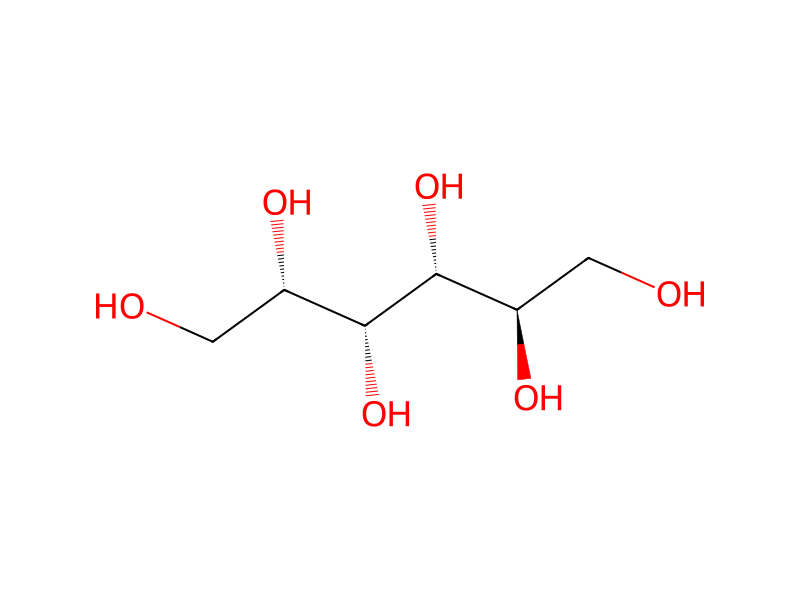
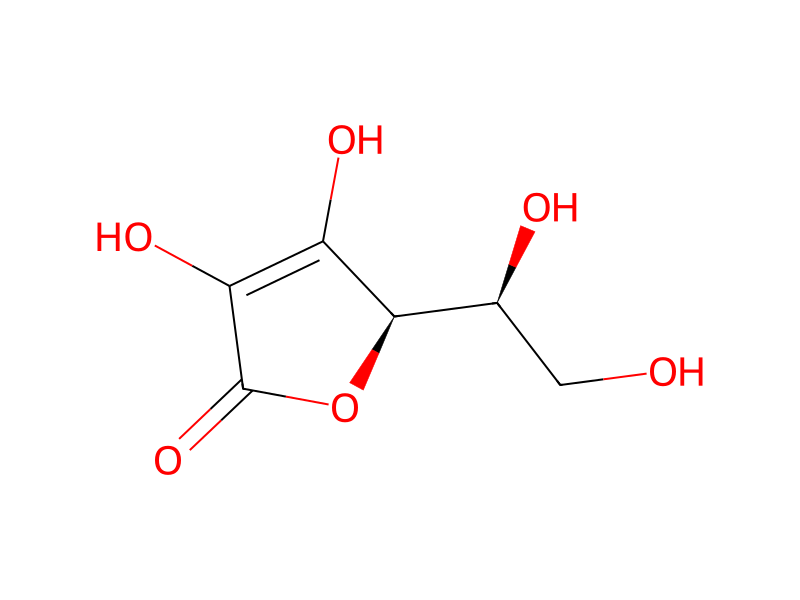
Sorbitol → L-Ascorbic Acid
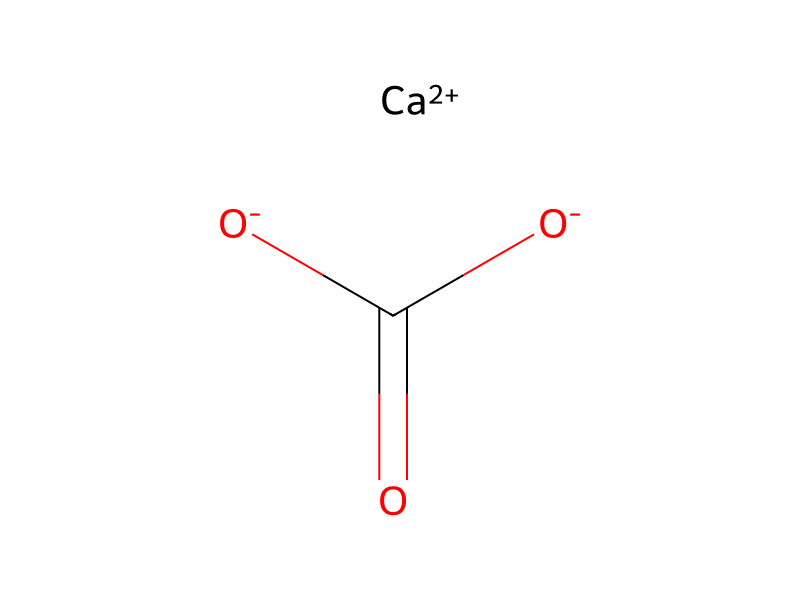
Reaction equation

[OH:1][CH2:2][C@@H:3]([C@H:5]([C@@H:7]([C@@H:9]([CH2:11][OH:12])[OH:10])[OH:8])[OH:6])[OH:4].OCC([C@H]([C@@H]([C@H](CO)O)O)O)=O.C([O-])([O-])=O.[Ca+2]>>[OH:8][C:7]1[C@@H:5]([C@@H:3]([OH:4])[CH2:2][OH:1])[O:6][C:11](=[O:12])[C:9]=1[OH:10]Participants
4

Procedure
A series of resting cell reactions (0.5 ml reaction mixture in 5 ml reaction tube) was carried out with 2% D-sorbitol or with 2% L-sorbose, and all reaction mixtures further contained 0.3% NaC1, 1% CaCO3 and cells at a final concentration of 5 absorbance units at 600 nanometers (OD600). After 20 h incubation time, G. oxydans DSM 17078 produced 270 mg/l or 670 mg/l of Vitamin C, respectively from 2% D-sorbitol or 2% L-sorbose, respectively. In comparison, strain G. oxydans DSM 17078-dSMS 05 produced 1540 mg/l or 1990 mg/l of Vitamin C, respectively.
Workup
- customcell reactions (0.5 ml reaction mixture in 5 ml reaction tube)
Sources & evidence
- ORD record
- ord-41cdecac4a6d4109991ec5d71d7f3080
- Source dataset
- uspto-grants-2012_11
- Patent number
- US08318462B2
Reaction notes
Loading…