Indole → N-(4-methylphenyl)indole
Reaction equation

[NH:1]1[C:9]2[C:4](=[CH:5][CH:6]=[CH:7][CH:8]=2)[CH:3]=[CH:2]1.Br[C:11]1[CH:16]=[CH:15][C:14]([CH3:17])=[CH:13][CH:12]=1.[O-]P([O-])([O-])=O.[K+].[K+].[K+].[C@@H]1(N)CCCC[C@H]1N>[Cu]I.CCCCCC.C(OCC)(=O)C.O1CCOCC1>[CH3:17][C:14]1[CH:15]=[CH:16][C:11]([N:1]2[C:9]3[C:4](=[CH:5][CH:6]=[CH:7][CH:8]=3)[CH:3]=[CH:2]2)=[CH:12][CH:13]=1Participants
8
Reactant 4

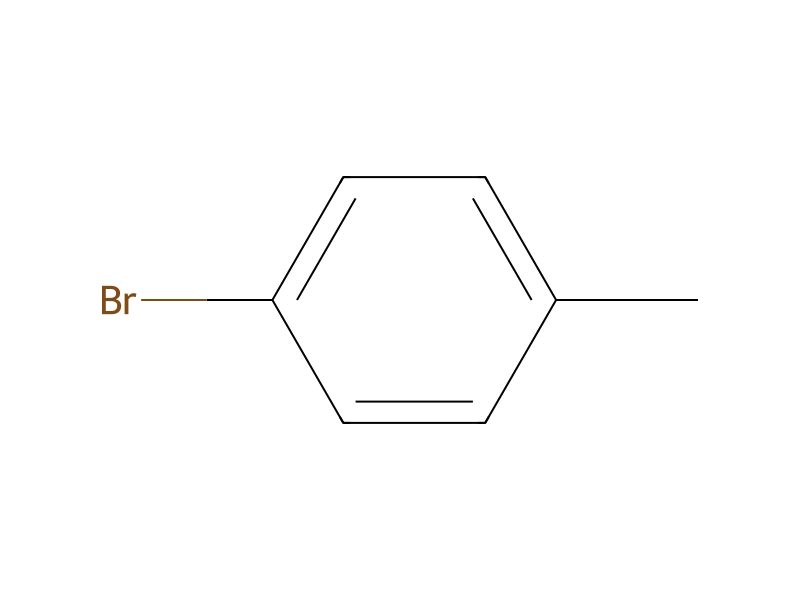


Product 1

Reagents, catalysts & solvents 3



Procedure
Using the general procedure outlined in Example 63, indole (0.117 g, 1.00 mmol) was coupled with 4-bromotoluene (185 μL, 1.50 mmol) using CuI (9.5 mg, 0.050 mmol, 5.0 mol %), K3PO4 (2.1 mmol), trans-1,2-cyclohexanediamine (24 μL, 0.20 mmol, 20 mol %) and dioxane (1.0 mL) to give the crude product. Column chromatography (2×15 cm, hexane:ethyl acetate 50:1) provided 0.197 g (95% yield) of the product as a white solid. This product was pure by 1H NMR when compared to the known spetra.
Workup
- customto give the crude product
Sources & evidence
- ORD record
- ord-eabd0a33d3204f20b34c46f367121a2b
- Source dataset
- uspto-grants-2004_07
- Patent number
- US06759554B2
Reaction notes
Loading…