Ethylene Glycol → HCID 11106179, compound
Reaction equation

[O-]P([O-])([O-])=O.[K+].[K+].[K+].[NH:9]1[CH2:16][CH2:15][CH2:14][C@H:10]1[C:11]([OH:13])=[O:12].I[C:18]1[CH:23]=[CH:22][CH:21]=[CH:20][CH:19]=1.C(O)CO.Cl>[Cu]I.C(OCC)C.O.CC(O)C>[C:18]1([N:9]2[CH2:16][CH2:15][CH2:14][C@H:10]2[C:11]([OH:13])=[O:12])[CH:23]=[CH:22][CH:21]=[CH:20][CH:19]=1Participants
Reactant 5


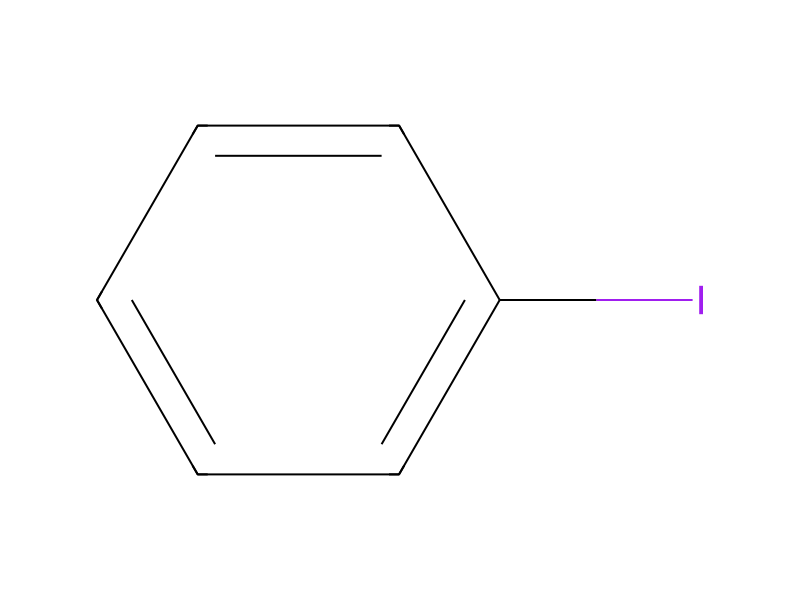


Product 1

Reagents, catalysts & solvents 4




Procedure
The general procedure under argon was followed using copper(I) iodide (10 mg, 0.05 mmol), K3PO4 (425 mg, 2.00 mmol), L-proline (138 mg, 1.20 mmol), iodobenzene (112 μL, 1.00 mmol), ethylene glycol (111 μL, 2.00 mmol) and 2-propanol (1.0 mL). After heated for a specified duration, the reaction was allowed to reach room temperature. Water and diluted HCl (10%) was added until ˜pH 3. Diethyl ether (2 mL) was added and the organic layer was analyzed by tlc. The reaction mixture was further extracted by diethyl ether (4×10 mL) and the combined organic phase was washed with brine and dried over Na2SO4. The solvent was rotary evaporated and the yellowish-brown residue was purified by column chromatography using a solvent mixture (diethyl ether/ethyl acetate=1/1, Rƒ=0.2) to afford N-phenyl-L-proline (134 mg, 70% isolated yield) as light yellow solid. The spectral data (1H NMR) matched with the literature references and indicated >95% purity. See Ma, D.; Zhang, Y.; Yao, J.; Wu, S.; Tao, F. J. Am. Chem. Soc. 1998, 120, 12459-12467.
Workup
- temperatureAfter heated for a specified duration
- customto reach room temperature
- extractionThe reaction mixture was further extracted by diethyl ether (4×10 mL)
- washthe combined organic phase was washed with brine
- dry with materialdried over Na2SO4
- customThe solvent was rotary evaporated
- customthe yellowish-brown residue was purified by column chromatography
Sources & evidence
- ORD record
- ord-1955661eec204be980f8d23bf41c2b08
- Source dataset
- uspto-grants-2004_07
- Patent number
- US06759554B2
Reaction notes
Loading…