Chlorobenzene → Biphenyl
Reaction equation

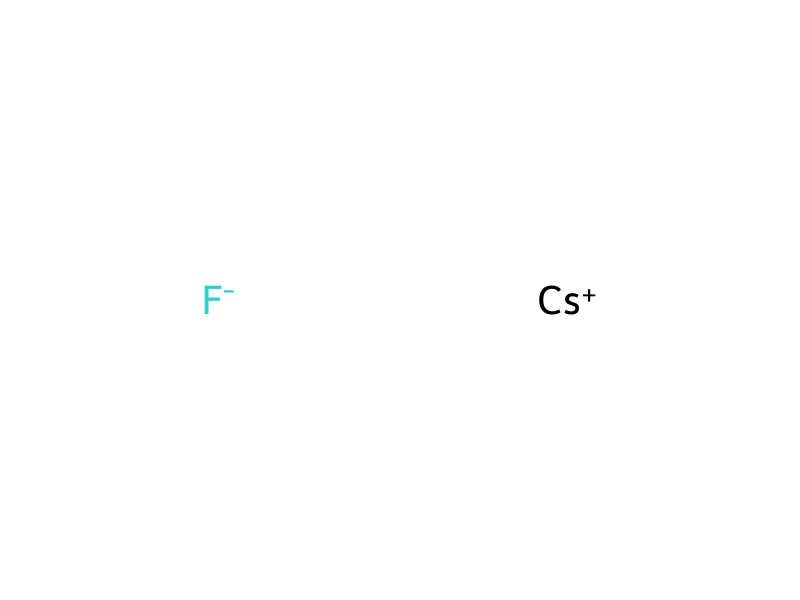
[C:1]1(Cl)[CH:6]=[CH:5][CH:4]=[CH:3][CH:2]=1.[C:8]1(B(O)O)[CH:13]=[CH:12][CH:11]=[CH:10][CH:9]=1.[F-].[Cs+]>O1CCOCC1.CCCCCC.O.C1CC=CCCC=C1.C1CC=CCCC=C1.[Ni]>[C:1]1([C:8]2[CH:13]=[CH:12][CH:11]=[CH:10][CH:9]=2)[CH:6]=[CH:5][CH:4]=[CH:3][CH:2]=1Participants







Procedure
A 100 mL of reactor equipped with magnetic stir bar was charged with 83.4 mg (0.303 mmol) of Ni(COD)2, 50.0 mg (0.308 mmol) of (t-Bu)2PH(O), 1.13 g (10.0 mmol) of Ph-Cl, 1.83 g (15.0 mmol) of PhB(OH)2 and 4.56 g (30.0 mmol) of CsF in 15 mL of 1,4-dioxane. The resulting mixture was refluxed for 20 h. The reaction was transferred to a separatory funnel, and diluted with 300 mL of hexane and 50 mL of H2O. The layers were separated, and organic layer was washed with H2O (2×100 mL), brine (100 mL), and dried over mgSO4, filtered, and the hexane and THF removed from the filtrate by rotary evaporation. The resulting residue was chromatographed on silicon gel using hexane as eluant. The eluate was concentrated by rotary evaporation followed by high vacuum to give 0.402 g (26% yield) of biphenyl.
Workup
- customA 100 mL of reactor equipped with magnetic stir bar
- temperatureThe resulting mixture was refluxed for 20 h
- customThe reaction was transferred to a separatory funnel
- customThe layers were separated
- washorganic layer was washed with H2O (2×100 mL), brine (100 mL)
- customdried over mgSO4
- filtrationfiltered
- customthe hexane and THF removed from the filtrate by rotary evaporation
- customThe resulting residue was chromatographed on silicon gel
- concentrationThe eluate was concentrated by rotary evaporation
Sources & evidence
- ORD record
- ord-5e18a876eaa74cecb6ce670707ebe82a
- Source dataset
- uspto-grants-2004_07
- Patent number
- US06762330B2
Reaction notes
Loading…