Benzimidazole → 1-[4-(1H-Benzimidazol-1-yl)phenyl]ethan-1-one
Reaction equation

Br[C:2]1[CH:7]=[CH:6][C:5]([C:8](=[O:10])[CH3:9])=[CH:4][CH:3]=1.[N:11]1[C:15]2[CH:16]=[CH:17][CH:18]=[CH:19][C:14]=2[NH:13][CH:12]=1.C(=O)([O-])[O-].[K+].[K+]>CN1CCCC1=O.[Cu]>[N:11]1([C:2]2[CH:7]=[CH:6][C:5]([C:8](=[O:10])[CH3:9])=[CH:4][CH:3]=2)[C:15]2[CH:16]=[CH:17][CH:18]=[CH:19][C:14]=2[N:13]=[CH:12]1Participants
6
Reactant 3

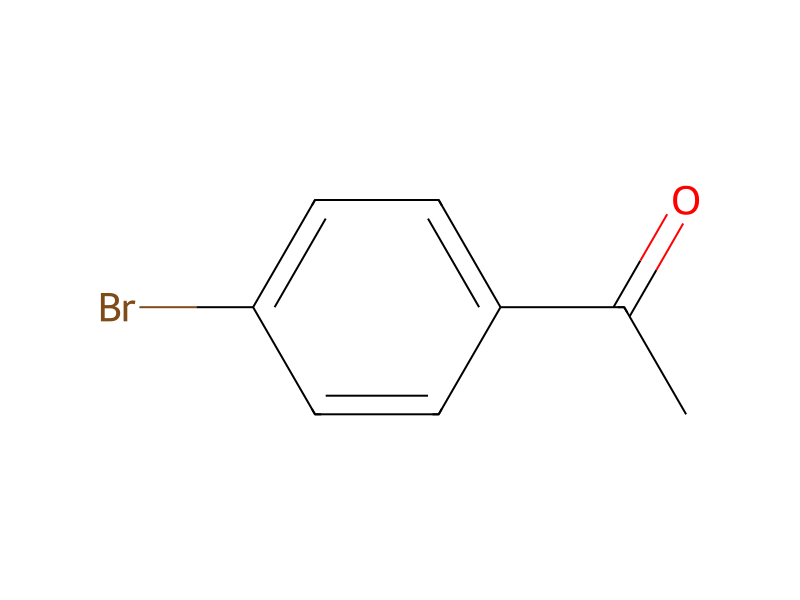

Product 1

Reagents, catalysts & solvents 2


Conditions
- Temperature
- 160 °C
Procedure
A mixture of p-bromoacetophenone (3.98 g, 20 mmol), benzimidazole (4.72 g, 40 mmol), copper bronze (1.27 g, 20 mmol), anhydrous potassium carbonate (5.52 g, 40 mmol) and cuprous bromide (290 mg, 2 mmol) in dry N-methylpyrrolidinone (60 ml) was heated under nitrogen at 160° C. for 8 hours. Most of the solvent was removed by distillation under reduced pressure and the residue was diluted with dichloromethane (500 ml) and 2N sodium hydroxide (200 ml). The organic layer was washed with water (300 ml), dried (MgSO4) and concentrated to give a dark brown oil. Purification by flash chromatography (eluting with ethyl acetate gave 4'-(1-benzimidazolyl)acetophenone, 3.085 g as a pale yellow solid, m.p. 133°-135° C.
Workup
- customMost of the solvent was removed by distillation under reduced pressure
- additionthe residue was diluted with dichloromethane (500 ml) and 2N sodium hydroxide (200 ml)
- washThe organic layer was washed with water (300 ml)
- dry with materialdried (MgSO4)
- concentrationconcentrated
- customto give a dark brown oil
- customPurification by flash chromatography (
- washeluting with ethyl acetate
Sources & evidence
- ORD record
- ord-6c03b44c4ec14462b94c886ede0abd50
- Source dataset
- uspto-grants-1992_09
- Patent number
- US05149814
Reaction notes
Loading…