4-Hydroxybenzaldehyde → 4-(Thiophen-3-ylmethoxy)-benzaldehyde
Reaction equation

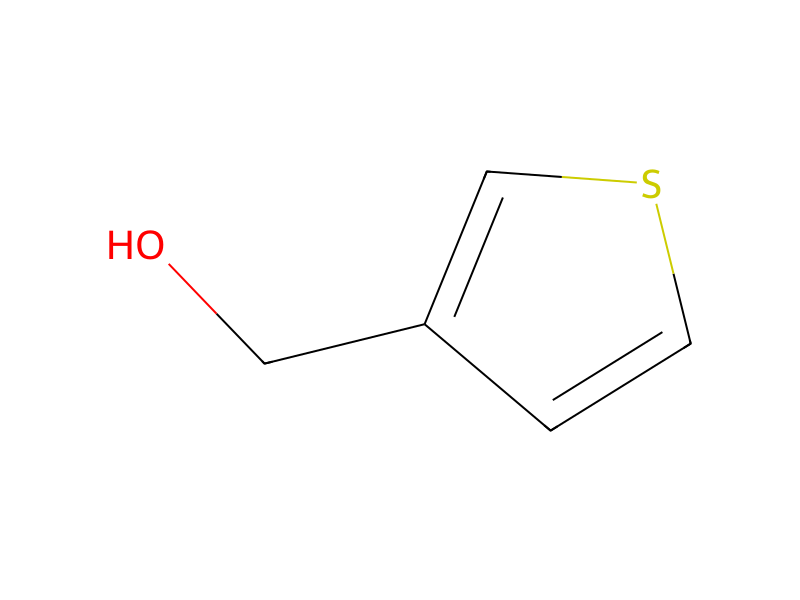
CCOC(/N=N/C(OCC)=O)=O.[OH:13][C:14]1[CH:21]=[CH:20][C:17]([CH:18]=[O:19])=[CH:16][CH:15]=1.[S:22]1[CH:26]=[CH:25][C:24]([CH2:27]O)=[CH:23]1.C1(P(C2C=CC=CC=2)C2C=CC=CC=2)C=CC=CC=1>O1CCCC1>[S:22]1[CH:26]=[CH:25][C:24]([CH2:27][O:13][C:14]2[CH:21]=[CH:20][C:17]([CH:18]=[O:19])=[CH:16][CH:15]=2)=[CH:23]1Participants
6





Procedure
To a tetrahydrofuran (250 mL) solution of diethylazodicarboxylate (16.1 mL, 40.9 mmol) were added 4hydroxybenzaldehyde (5 g, 40.9 mmol), 3-thiophene methanol (3.86 mL, 40.9 mmol) and PS-triphenylphosphine (29 g, 1.41 mmol/g, 40.9 mmol). This mixture was stirred for 7 hours at room temperature. This mixture was concentrated under a reduced pressure, and the residue was purified by silica gel column chromatography (heptane:ethyl acetate=2:1) to obtain the title compound (3.61 g, 40%).
Workup
- concentrationThis mixture was concentrated under a reduced pressure
- customthe residue was purified by silica gel column chromatography (heptane:ethyl acetate=2:1)
Sources & evidence
- ORD record
- ord-76e37a36753349aeb910efaf614fffdd
- Source dataset
- uspto-grants-2013_08
- Patent number
- US08507530B2
Reaction notes
Loading…