4-Methoxybenzyl alcohol → 4-Methoxybenzyl alcohol
Reaction equation

[CH3:1][O:2][C:3]1[CH:10]=[CH:9][C:6]([CH2:7][OH:8])=[CH:5][CH:4]=1.CCN(CC)CC>C(#N)C>[CH3:1][O:2][C:3]1[CH:10]=[CH:9][C:6]([CH:7]=[O:8])=[CH:5][CH:4]=1.[CH3:1][O:2][C:3]1[CH:10]=[CH:9][C:6]([CH2:7][OH:8])=[CH:5][CH:4]=1Participants
Reactant 2
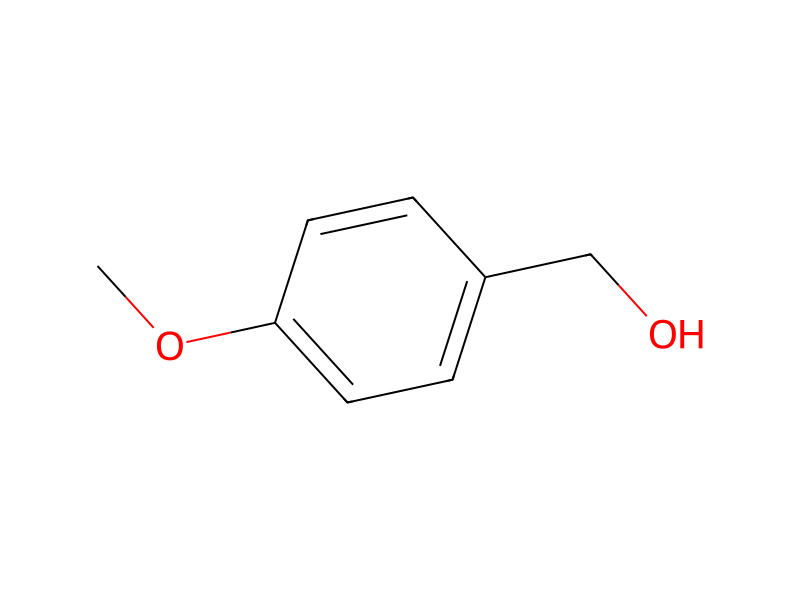

Product 2
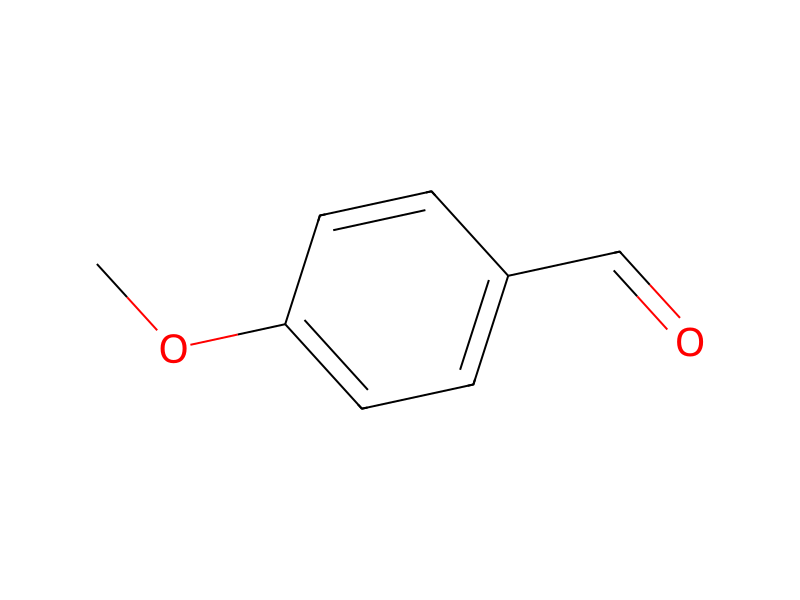
Reagents, catalysts & solvents 1

Procedure
To gain insight into the role of the base additive, (HQ)2VV(O)(OC6H4OCH3) (9) was prepared from the reaction of 8 with 4-methoxybenzylalcohol in acetonitrile. In the absence of base, complex 9 was relatively stable in CD2Cl2 solution, with less than 5% reacting after 16 h at room temperature. However, a rapid reaction occurred when a CD2Cl2 solution of 9 was treated with NEt3 (2 equiv) under argon, affording the vanadium(IV) complex (HQ)2VIV(O) (10), 4-methoxy-benzaldehyde (0.5 equiv, 100% yield) and 4-methoxybenzylalcohol (0.5 equiv, 100% yield) within 2 h at room temperature (Scheme 3). The increased reactivity observed in the presence of NEt3 suggests a key role for the base additive in promoting the alcohol oxidation step. When the reaction of 9 with NEt3 was carried out under air in CD2Cl2, quantitative conversion to the cis-dioxo vanadium(V) complex (HQ)2VV(O)2HNEt3 (11) and 4-methoxybenzaldehyde was observed after 22 h at room temperature. Complex 11 was independently prepared by the reaction of the μ-oxo complex [(HQ)2VV(O)]2μ-O (12) (Giacomelli, A.; Floriani, C.; Duarte, A. O. D. S.; Chiesi-Villa, A.; Guastini, C. Inorg. Chem. 1982, 21, 3310-3316) with H2O and NEt3 in CH2Cl2. When tested for the oxidation of 4-methoxybenzylalcohol in combination with 10 mol % NEt3, both complexes 10 and 11 were effective catalysts, affording complete conversion in 24 h at 60° C.
Workup
- customHowever, a rapid reaction
Sources & evidence
- ORD record
- ord-e75173b52b204c2d9880255d8f8d0e4c
- Source dataset
- uspto-grants-2013_08
- Patent number
- US08519132B2
Reaction notes
Loading…