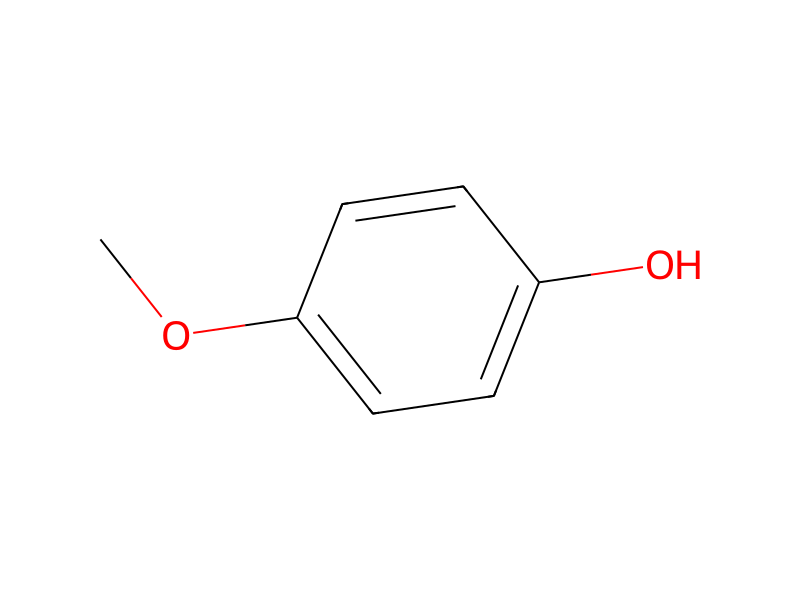
4-Methoxyphenol → HCID 23372923, compound
Reaction equation

[H-].[Na+].[CH3:3][O:4][C:5]1[CH:10]=[CH:9][C:8]([OH:11])=[CH:7][CH:6]=1.[NH2:12][C:13]1[O:17][N:16]=[C:15]([CH3:18])[C:14]=1Br.[OH-].[Na+]>CN(C)C=O.C(OCC)(=O)C>[NH2:12][C:13]1[O:17][N:16]=[C:15]([CH3:18])[C:14]=1[O:11][C:8]1[CH:9]=[CH:10][C:5]([O:4][CH3:3])=[CH:6][CH:7]=1Participants






Procedure
To a mixture of sodium hydride (60% dispersion in mineral oil, 52 mg, 1.3 mmol) in dry dimethylformamide (2.0 ml) was added 4-methoxyphenol (0.15 g, 1.2 mmol). After stirring the solution at room temperature of 10 min, 5-amino-4-bromo-3-methylisoxazole (0.20 g, 1.1 mmol) was added, followed by bis(triphenylphosphine)palladium(11) chloride (79 mg, 0.11 mmol). The mixture was heated to 50° C. for 2.5 h and then cooled to room temperature. The dark brown reaction mixture was worked up with ethyl acetate and 5% NaOH. The organic layer was dried with magnesium sulfate, filtered and concentrated under reduced pressure. The residue was chromatographed on silica gel using 20% ethyl acetate in hexanes as eluent to give 0.13 g (51% yield) of 5-amino-4-(4-methoxyphenoxy)-3-methylisoxazole.
Workup
- temperatureThe mixture was heated to 50° C. for 2.5 h
- temperaturecooled to room temperature
- dry with materialThe organic layer was dried with magnesium sulfate
- filtrationfiltered
- concentrationconcentrated under reduced pressure
- customThe residue was chromatographed on silica gel using 20% ethyl acetate in hexanes as eluent
Sources & evidence
- ORD record
- ord-ad1b603aa512412bbb524b88809e393b
- Source dataset
- uspto-grants-1996_11
- Patent number
- US05571821
Reaction notes
Loading…