N,N-Diethylaniline → Anthraquinone
Reaction equation

N[C:2]1[C:15]2[C:14](=[O:16])[C:13]3[C:8](=[C:9](Cl)[CH:10]=[CH:11][CH:12]=3)[C:7](=[O:18])[C:6]=2[C:5](O)=[CH:4][C:3]=1OC1C=CC=CC=1O.C(N(CC)C1C=CC=CC=1)C.FN1N=C(F)C=C(NCCC#N)N1>O1CCCC1>[CH:9]1[C:8]2[C:7](=[O:18])[C:6]3[C:15](=[CH:2][CH:3]=[CH:4][CH:5]=3)[C:14](=[O:16])[C:13]=2[CH:12]=[CH:11][CH:10]=1Participants
Reactant 3


Product 1
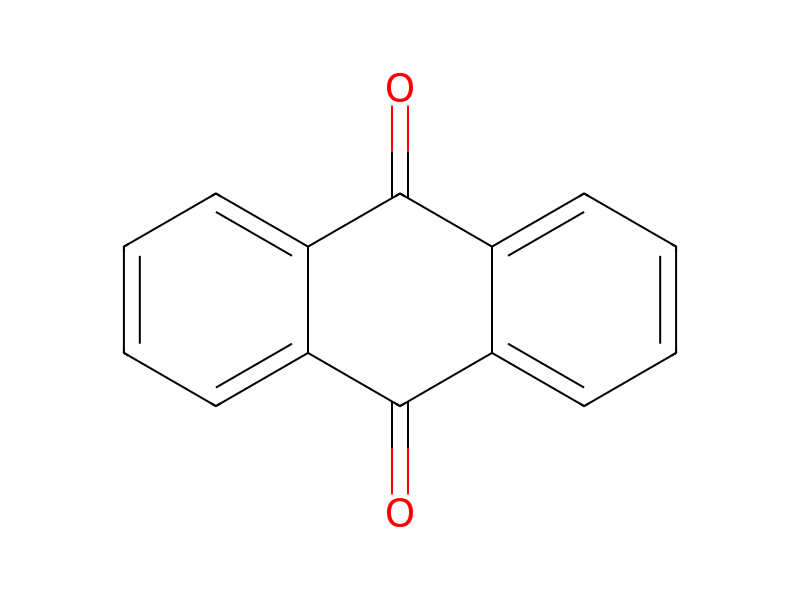
Reagents, catalysts & solvents 1

Procedure
To a solution of 1-amino-2-(2-hydroxyphenyloxy)-4-hydroxy-5-chloroanthraquinone (3.82 g) in tetrahydrofuran (50 ml), N,N-diethylaniline (1.7 g) and 2,4-difluoro-6-(β-cyanoethyl)aminotriazine (1.85 g) were added and the mixture was subjected to condensation as in Example 3. The reaction liquor was treated as in Example 1 to produce 5.3 g of anthraquinone dye (λ max in acetone=527 nm) of the following formula in a yield of 93%. ##STR12## A dye dispersion was made from a mixture of the anthraquinone dye (16 parts), polyoxyethylene glycol nonylphenyl ether with an HLB of 13.3 (7 parts), naphthalene-sulfonic acid-formaldehyde condensate (3 parts) and water (74 parts) by grinding it with a sand grinder. Using the dye dispersion, a padding bath having the following formulation was prepared.
Workup
- customthe mixture was subjected to condensation as in Example 3
- additionThe reaction liquor was treated as in Example 1
Sources & evidence
- ORD record
- ord-0c03064c424546caa497e8f838000a1c
- Source dataset
- uspto-grants-1984_03
- Patent number
- US04436906
Reaction notes
Loading…