Water → HCID 86743097, compound
Reaction equation

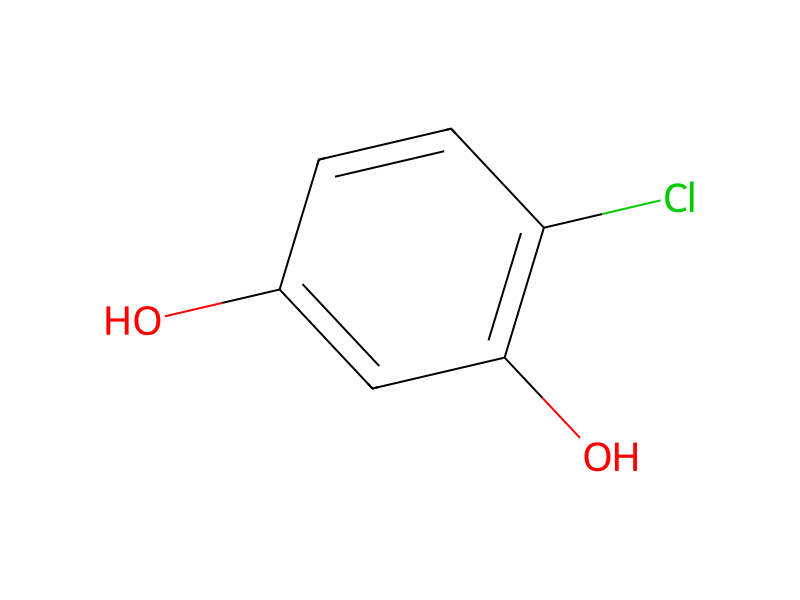
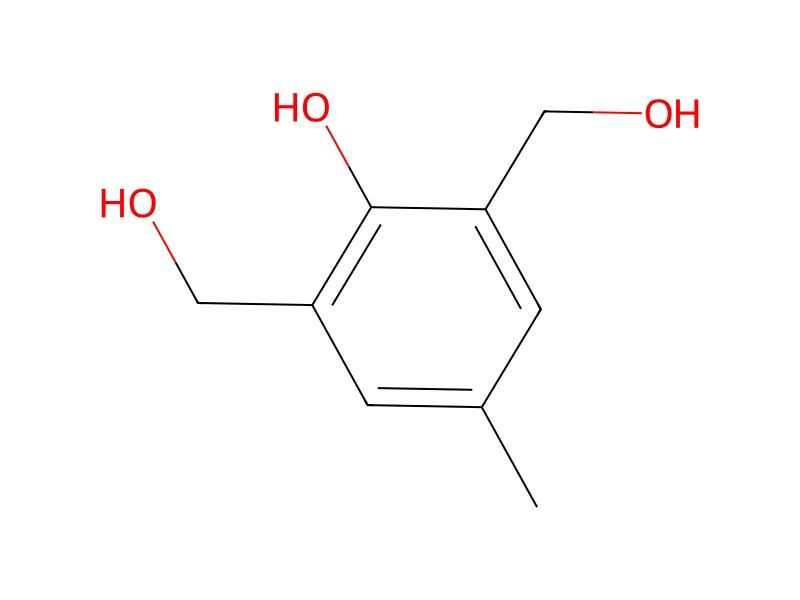
[OH:1][CH2:2][C:3]1[C:8]([OH:9])=[C:7]([CH2:10][OH:11])[CH:6]=[C:5]([CH3:12])[CH:4]=1.[Cl:13][C:14]1[CH:20]=[CH:19][C:17]([OH:18])=[CH:16][C:15]=1[OH:21].O.C1(C)C=CC(S(O)(=O)=O)=CC=1.O>C(OCCO)C>[OH:11][CH2:10][C:7]1[C:8]([OH:9])=[C:3]([CH2:2][OH:1])[CH:4]=[C:5]([CH3:12])[CH:6]=1.[Cl:13][C:14]1[CH:20]=[CH:19][C:17]([OH:18])=[CH:16][C:15]=1[OH:21]Participants
Reactant 4


Product 1

Reagents, catalysts & solvents 1

Procedure
2,6-Bis(hydroxymethyl)-p-cresol (30 g, 0.178 moles), 4-chlororesorcinol (27.07 g, 0.187 moles) and p-toluenesulfonic acid monohydrate (0.8 g, 0.0042 moles) were heated at 87°-90° C. for four hours in 60 mL of stirred 2-ethoxyethanol. The reaction mixture was diluted with 250 mL 2-ethoxyethanol and added dropwise to 2.4 L of stirred H2O. The solid was collected by filtration, reslurried in 400 mL H2O, and stirred overnight. The polymer was again collected, reslurried, and filtered. The reslurrying operation was repeated twice more. The polymer was vacuum dried to yield 50.33 g. See Tables 1 and 2 for glass transition temperature and alkaline dissolution data. The ortho-, ortho-linkages of the alternating copolymers and the terminal groups were identified by 13C NMR analysis.
Workup
- filtrationThe solid was collected by filtration
- customThe polymer was again collected
- filtrationfiltered
- customdried
- customto yield 50.33 g
- dissolutionfor glass transition temperature and alkaline dissolution data
Sources & evidence
- ORD record
- ord-b7fd2af3dd204f87bf5b4fcba339c3ac
- Source dataset
- uspto-grants-1989_06
- Patent number
- US04837121
Reaction notes
Loading…