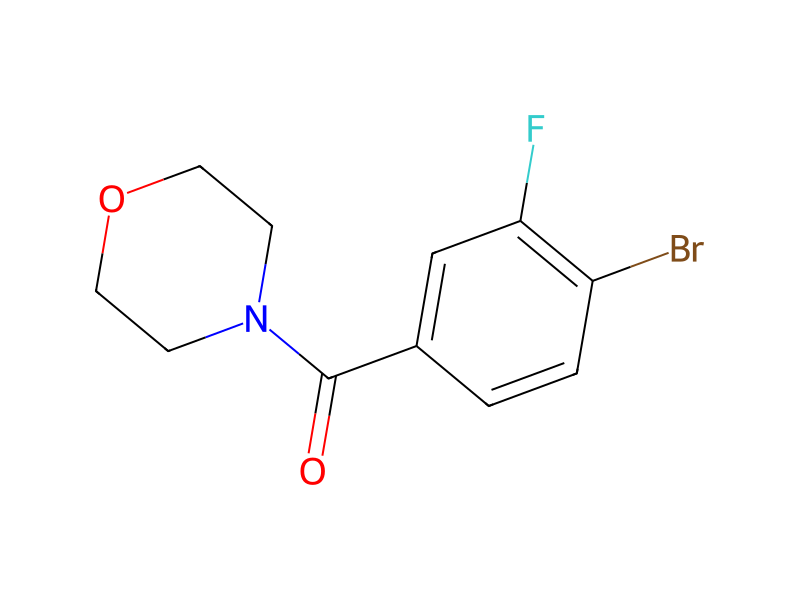
1,2-Dichloroethane → (4-Bromo-3-fluorophenyl)(morpholin-4-yl)methanone
Reaction equation

[Br:1][C:2]1[CH:10]=[CH:9][C:5]([C:6]([OH:8])=O)=[CH:4][C:3]=1[F:11].[NH:12]1[CH2:17][CH2:16][O:15][CH2:14][CH2:13]1.C(N1CCOCC1)C.C1C=CC2N(O)N=NC=2C=1.C(Cl)CCl>CN(C=O)C>[Br:1][C:2]1[CH:10]=[CH:9][C:5]([C:6]([N:12]2[CH2:17][CH2:16][O:15][CH2:14][CH2:13]2)=[O:8])=[CH:4][C:3]=1[F:11]Participants
7





Procedure
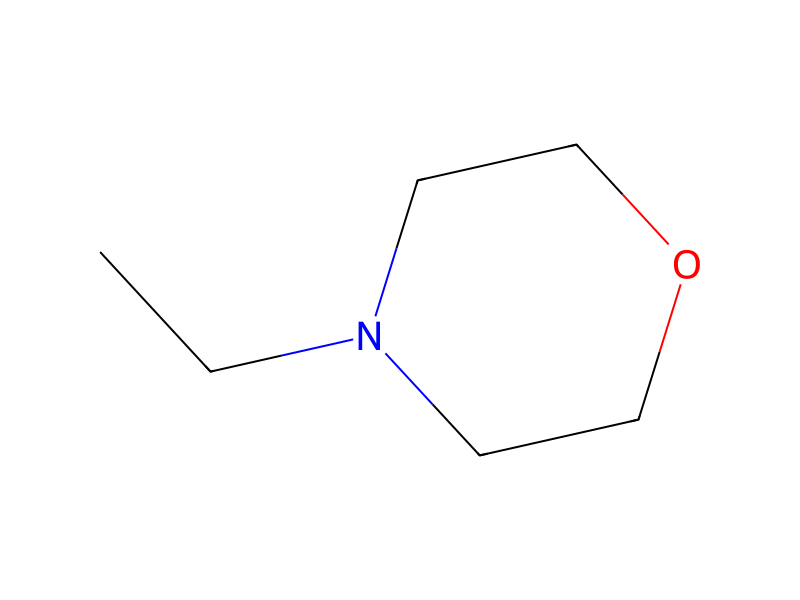
A 500 mL flask was charged with 4-bromo-3-fluorobenzoic acid (5.00 g, 22.83 mmol), 100 mL DMF, morpholine (2.4 ml, 27.5 mmol), and 4-Ethylmorpholine (8.6 ml, 67.9 mmol). HOBt (4.32 g, 32.0 mmol) was added followed by EDC (5.25 g, 27.4 mmol) and the reaction allowed to stir at room temperature for 18 hours. The reaction was concentrated and the resulting orange syrup taken up in 100 mL EtOAc and 100 mL water. The organic layer was washed with 100 mL 2N HCl, 100 mL saturated sodium bicarbonate, and 100 mL saturated sodium chloride. The organic was then dried with MgSO4, filtered, and concentrated to give 6.476 g (98%) of a viscous yellow oil. This material was used without further purification.
Workup
- concentrationThe reaction was concentrated
- washThe organic layer was washed with 100 mL 2N HCl, 100 mL saturated sodium bicarbonate, and 100 mL saturated sodium chloride
- dry with materialThe organic was then dried with MgSO4
- filtrationfiltered
- concentrationconcentrated
Sources & evidence
- ORD record
- ord-16a8eed857194b81a67067ac9d48b707
- Source dataset
- uspto-grants-2013_12
- Patent number
- US08598169B2
Reaction notes
Loading…