3-Hydroxypyridine → 3-Bromo-5-[(pyridin-3-yl)oxy]pyridine
Reaction equation

[Br:1][C:2]1[CH:3]=[N:4][CH:5]=[C:6](F)[CH:7]=1.[OH:9][C:10]1[CH:11]=[N:12][CH:13]=[CH:14][CH:15]=1.C(=O)([O-])[O-].[K+].[K+]>CN(C=O)C.[Li+].[Cl-]>[Br:1][C:2]1[CH:3]=[N:4][CH:5]=[C:6]([O:9][C:10]2[CH:11]=[N:12][CH:13]=[CH:14][CH:15]=2)[CH:7]=1Participants
6


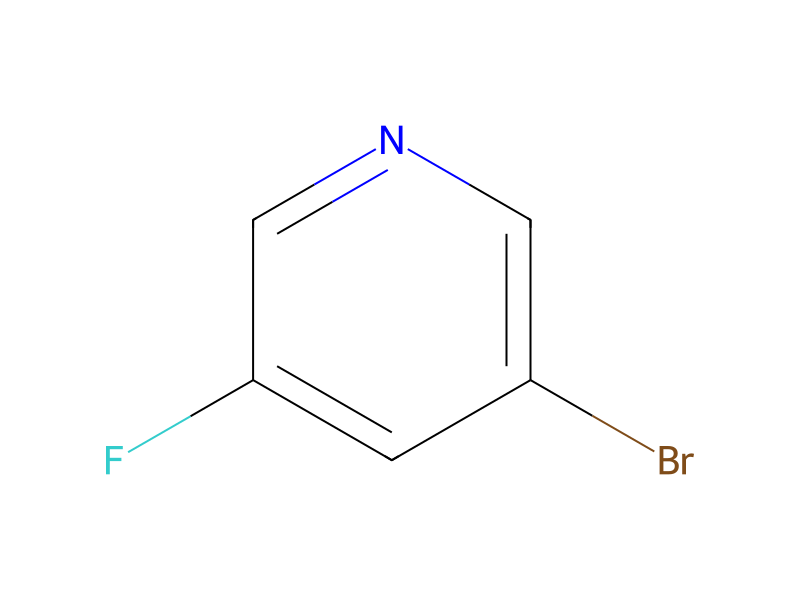



Conditions
- Temperature
- 200 °C
Procedure
A mixture of 3-bromo-5-fluoropyridine (1.5 g, 8.5 mmol, 1.0 eq), 3-hydroxypyridine (970 mg, 10.2 mmol, 1.20 eq), and potassium carbonate (1.8 g, 13 mmol, 1.5 eq) in DMF (30 mL) was heated at 200° C. for 30 minutes in the microwave. The reaction mixture was diluted with 3M LiCl and extracted (3×) with CH2Cl2. The combined organics were dried (MgSO4), filtered, and concentrated in vacuo to give 2.0 g (94%) of the title compound as a brown liquid: 1H NMR (400 MHz, DMSO-d6) δ 8.54 (d, J=1.8 Hz, 1H), 8.49 (d, J=2.8 Hz, 1H), 8.46-8.44 (m, 2H), 7.85 (t, J=2.2 Hz, 1H), 7.60 (ddd, J=8.4, 2.9, 1.2 Hz, 1H), 7.48 (dd, J=8.4, 4.6 Hz, 1H); ES-MS [M+1]+:251.0.
Workup
- extractionextracted (3×) with CH2Cl2
- dry with materialThe combined organics were dried (MgSO4)
- filtrationfiltered
- concentrationconcentrated in vacuo
Sources & evidence
- ORD record
- ord-274a9a5326aa43fe85cef1bc72c059a5
- Source dataset
- uspto-grants-2013_12
- Patent number
- US08598345B2
Reaction notes
Loading…