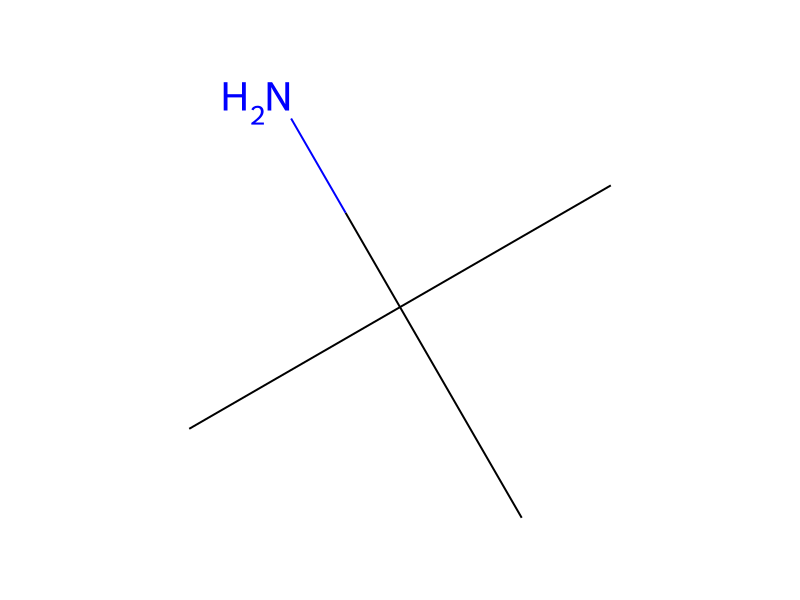
Tert-Butylamine → HCID 68717765, compound
Reaction equation

[ClH:1].[O:2]=[C:3]1[N:7]([C:8]2[N:13]=[CH:12][C:11]([C:14]([NH2:16])=[O:15])=[CH:10][CH:9]=2)[NH:6][CH:5]=[C:4]1[C:17]1[CH:18]=[N:19][CH:20]=[CH:21][CH:22]=1.[C:23](N)([CH3:26])([CH3:25])[CH3:24]>C1COCC1>[ClH:1].[C:23]([NH:16][C:14]([C:11]1[CH:12]=[N:13][C:8]([N:7]2[C:3](=[O:2])[C:4]([C:17]3[CH:18]=[N:19][CH:20]=[CH:21][CH:22]=3)=[CH:5][NH:6]2)=[CH:9][CH:10]=1)=[O:15])([CH3:26])([CH3:25])[CH3:24]Participants
4
Reactant 2

Product 1

Reagents, catalysts & solvents 1

Procedure
337 mg (1.0 mmol) of 6-(5-oxo-4-pyridin-3-yl-2,5-dihydro-1H-pyrazol-1-yl)pyridin-3-carbonyl chloride from Example 17 (Step a) are initially charged, a solution of 293 mg (4.0 mmol) of tert-butylamine in 15 ml of THF is added and the mixture is stirred at RT for 1 h. The mixture is then concentrated on a rotary evaporator, and the residue is purified by preparative HPLC (RP18 column; mobile phase: acetonitrile/water gradient with 0.1% TFA added to the water). The product-containing fractions are combined and concentrated. The residue is dissolved in 1 N hydrochloric acid, and the solution is then lyophilized.
Workup
- concentrationThe mixture is then concentrated on a rotary evaporator
- customthe residue is purified by preparative HPLC (RP18 column
- additionmobile phase: acetonitrile/water gradient with 0.1% TFA added to the water)
- concentrationconcentrated
- dissolutionThe residue is dissolved in 1 N hydrochloric acid
Sources & evidence
- ORD record
- ord-90b7f512a00c4669bab43a4b848c051d
- Source dataset
- uspto-grants-2013_12
- Patent number
- US08609698B2
Reaction notes
Loading…