4-Iodophenol → 1-(2-(4-Iodophenoxy)ethyl)pyrrolidine
Reaction equation

[I:1][C:2]1[CH:7]=[CH:6][C:5]([OH:8])=[CH:4][CH:3]=1.Cl.Cl[CH2:11][CH2:12][N:13]1[CH2:17][CH2:16][CH2:15][CH2:14]1.C([O-])([O-])=O.[K+].[K+]>CN(C=O)C>[I:1][C:2]1[CH:7]=[CH:6][C:5]([O:8][CH2:11][CH2:12][N:13]2[CH2:17][CH2:16][CH2:15][CH2:14]2)=[CH:4][CH:3]=1Participants
5
Reactant 3


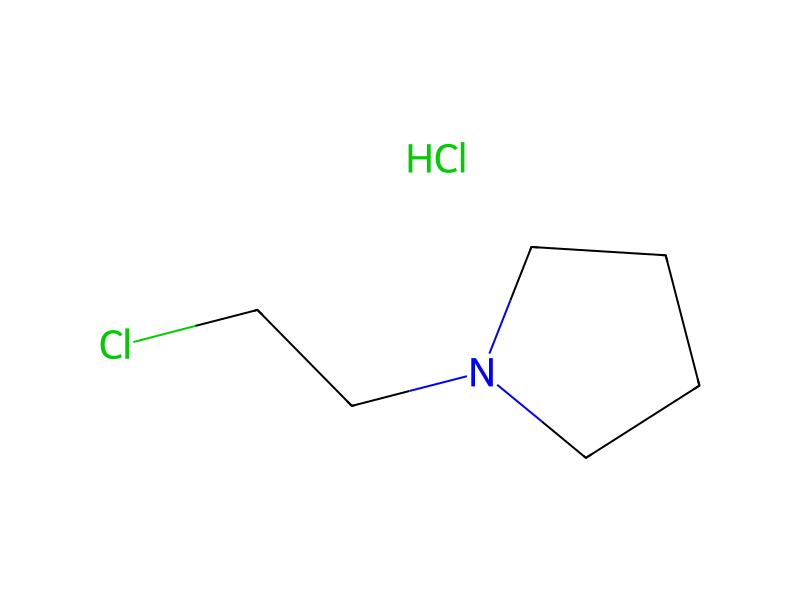
Product 1

Reagents, catalysts & solvents 1

Procedure
A reaction mixture of 44 g (0.2 mol) 4-iodophenol, 34 g (0.2 mol) 1-(2-chloro-ethyl)-pyrrolidine-hydrochloride, 110.56 g (0.8 mol) K2CO3 and 800 mL DMF is stirred for 48 h at RT. The reaction mixture is filtered and the filtrate is evaporated down. The residue is taken up in water and extracted with EtOAc. The organic phase is extracted with saturated NaCl solution and dried over Na2SO4. The purification is carried out by column chromatography on silica gel (EtOAc/MeOH/NH3 85:15:1.5).
Workup
- filtrationThe reaction mixture is filtered
- customthe filtrate is evaporated down
- extractionextracted with EtOAc
- extractionThe organic phase is extracted with saturated NaCl solution
- dry with materialdried over Na2SO4
- customThe purification
Sources & evidence
- ORD record
- ord-a51743834413470dbc11f85107daf55e
- Source dataset
- uspto-grants-2013_12
- Patent number
- US08618132B2
Reaction notes
Loading…