Potassium Phosphate, Tribasic → 6-Cyclopropylpyridine-3-carbonitrile
Reaction equation

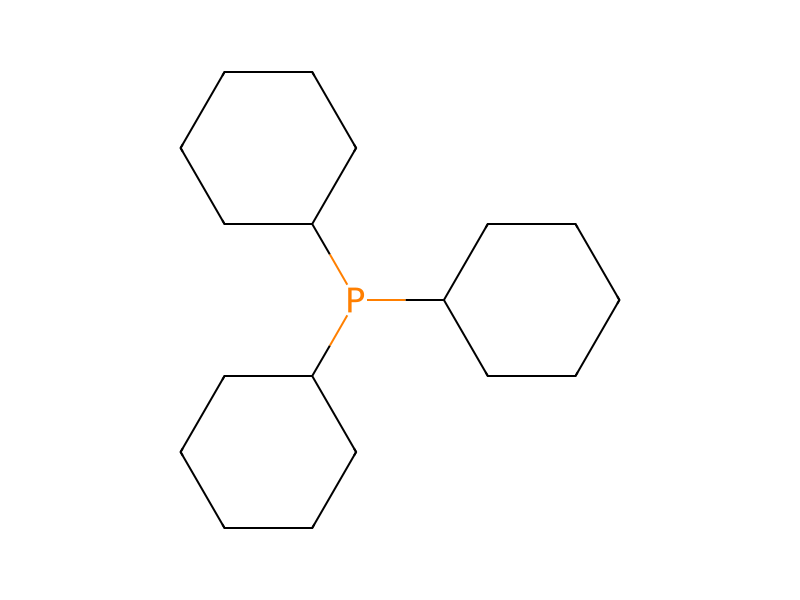
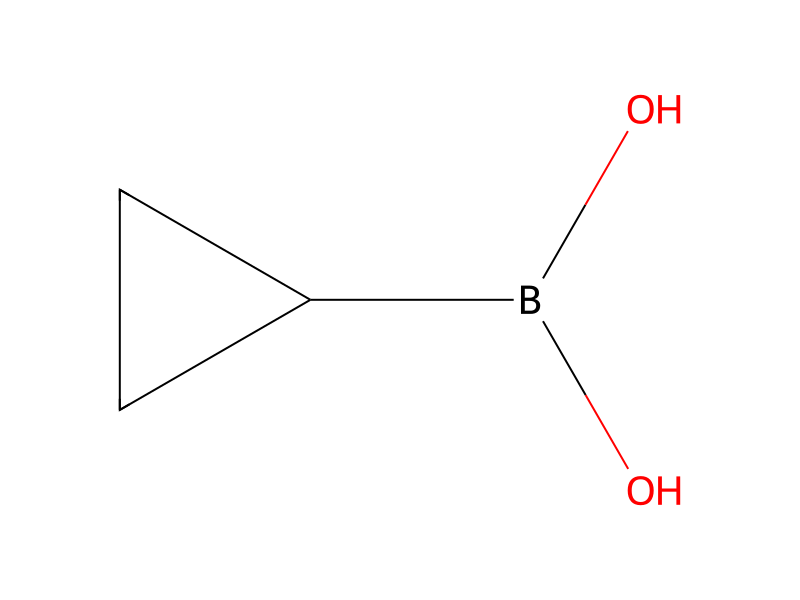
Br[C:2]1[CH:7]=[CH:6][C:5]([C:8]#[N:9])=[CH:4][N:3]=1.[CH:10]1(B(O)O)[CH2:12][CH2:11]1.P([O-])([O-])([O-])=O.[K+].[K+].[K+].C1(P(C2CCCCC2)C2CCCCC2)CCCCC1>C1(C)C=CC=CC=1.O.C([O-])(=O)C.[Pd+2].C([O-])(=O)C>[CH:10]1([C:2]2[CH:7]=[CH:6][C:5]([C:8]#[N:9])=[CH:4][N:3]=2)[CH2:12][CH2:11]1Participants
Reactant 4


Product 1

Reagents, catalysts & solvents 3



Conditions
- Temperature
- 100 °C
Procedure
Deoxygenate a mixture of 2-bromo-5-cyanopyridine (1.83 g, 10.0 mmol), cyclopropylboronic acid (1.1 g, 13 mmol), palladium(II) acetate (0.11 g, 0.49 mmol), and potassium phosphate (7.4 g, 35 mmol) in toluene (40.00 mL) and water (2 mL) by bubbling nitrogen through the mixture. Add tricyclohexylphosphine (1.0 mL, 1.0 mmol, 1 M in toluene). Heat the reaction mixture at 100° C. for 14 hours and allow the reaction mixture to cool. Decant the supernatant and wash the leftover sludge with dichloromethane. Concentrate the combined organics in vacuo. Purify by silica gel chromatography (0-5% ethyl acetate/hexane) to afford the titled compound as a white crystalline solid (774 mg, 47%). 1H NMR (400 MHz, CDCl3) δ 1.08 (m, 4H), 2.05 (m, 1H), 7.23 (dd, J=8.2, 1.0 Hz, 1H), 7.73 (dd, J=8.0, 2.4 Hz, 1H), 8.66 (d, J=1.2 Hz, 1H).
Workup
- customDeoxygenate
- customby bubbling nitrogen through the mixture
- temperatureto cool
- customDecant the supernatant
- washwash the leftover sludge with dichloromethane
- concentrationConcentrate the combined organics in vacuo
- customPurify by silica gel chromatography (0-5% ethyl acetate/hexane)
Sources & evidence
- ORD record
- ord-c5996eb5f07645519fc0dda666324d2e
- Source dataset
- uspto-grants-2012_05
- Patent number
- US08168659B2
Reaction notes
Loading…