4-Methoxybenzaldehyde → 1-(2-Chloro-2-nitrovinyl)-4-methoxybenzene
Reaction equation

[CH3:1][O:2][C:3]1[CH:10]=[CH:9][C:6]([CH:7]=O)=[CH:5][CH:4]=1.Br[CH2:12][N+:13]([O-:15])=[O:14].[Cl-:16].C[NH2+]C.[F-].[K+]>C1(C)C(C)=CC=CC=1.ClCCl.O>[Cl:16]/[C:12](/[N+:13]([O-:15])=[O:14])=[CH:7]\[C:6]1[CH:9]=[CH:10][C:3]([O:2][CH3:1])=[CH:4][CH:5]=1Participants
Reactant 4
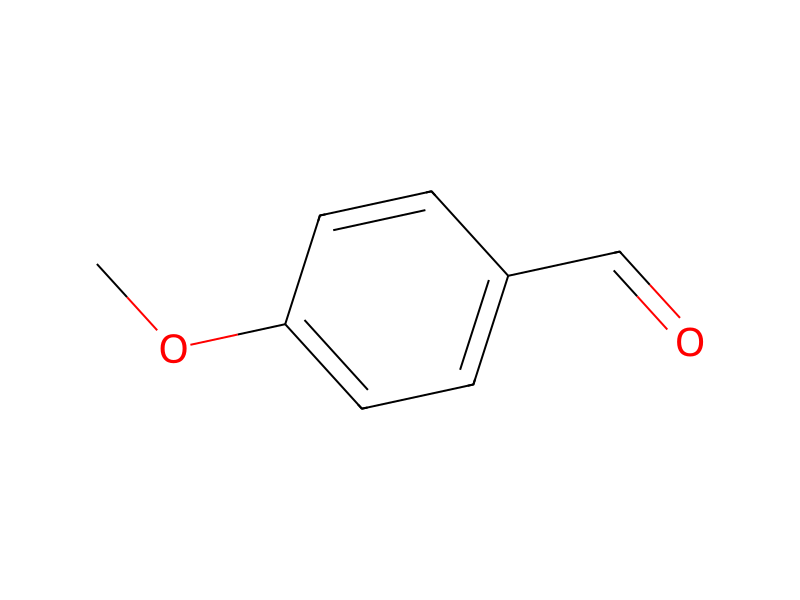



Product 1

Reagents, catalysts & solvents 3



Procedure
As in a procedure described in the literature [D. Dauzonne, Synthesis, 1990, 66-70], stir a mixture of 10.0 g (73.5 mmol) 4-methoxybenzaldehyde, 9.0 ml (13.5 g, 96.2 mmol) bromonitromethane, 53.9 g (661.0 mmol) dimethylammonium chloride and 0.6 g (1.0 mmol) potassium fluoride in 150 ml xylene on a water separator at 160° C. for 15 hours. After adding 25 ml water and 100 ml dichloromethane, separate the organic phase and extract the aqueous phase three times with 100 ml dichloromethane each time. Dry the combined organic extracts over sodium sulphate, filter and concentrate by vacuum evaporation. Chromatograph the residue on silica gel (solvent: cyclohexane/dichloromethane 1:1). 9.6 g (59% of theor.) of the target compound is obtained.
Workup
- customAs in a procedure described in the literature [D. Dauzonne, Synthesis, 1990, 66-70]
- customseparate the organic phase
- extractionextract the aqueous phase three times with 100 ml dichloromethane each time
- dry with materialDry the combined organic extracts over sodium sulphate
- filtrationfilter
- concentrationconcentrate by vacuum evaporation
- custom9.6 g (59% of theor.) of the target compound is obtained
Sources & evidence
- ORD record
- ord-56987c0d79654ba9af5c7415de26a595
- Source dataset
- uspto-grants-2012_05
- Patent number
- US08183246B2
Reaction notes
Loading…