Triethylamine → HCID 67586751, compound
Reaction equation

[C:1]([C:4]1([OH:14])[CH:12]=[C:11]([OH:13])[CH:10]=[CH:9][CH:5]1[C:6]([OH:8])=[O:7])(=[O:3])[CH3:2].CC1C=C(C(C)(C)C)[C:19]([OH:26])=[C:18]([C:27](C)(C)C)[CH:17]=1.C(N(CC)CC)C.CC(C(Cl)=O)=C>O1CCCC1>[C:1]([C:4]1([OH:14])[CH:12]=[C:11]([O:13][C:19](=[O:26])[C:18]([CH3:27])=[CH2:17])[CH:10]=[CH:9][CH:5]1[C:6]([OH:8])=[O:7])(=[O:3])[CH3:2]Participants
Reactant 4

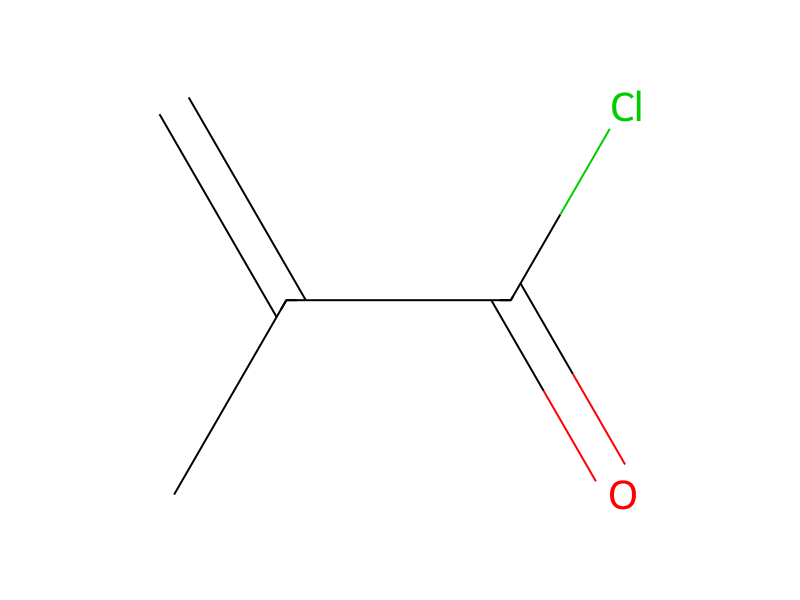


Product 1

Reagents, catalysts & solvents 1

Conditions
- Temperature
- 0 °C
Procedure
2-acetyl-4-hydroxysalicylic acid (15.0 millimole, 2.9 g) and butylhydroxytoluene (10 mg) was dissolved in tetrahydrofuran (THF). To the solution was added triethylamine (0.5 g), and the solution was cooled to 0° C. by ice bath. While stirring under a flow of nitrogen gas, methacryl chloride (20 millimole, 2.41 g) was added to the solution using a syringe over a period of 20 minutes, and the solution was kept stirred for another hour after completing the addition. After the reaction was over, the solvent was evaporated to give pale yellow powder. The powder was washed by dichloromethane and recrystallized by an aqueous solution of 0.5% hydroquinone. Dried under a reduced pressure, colorless crystal having a needle shape was obtained: m.p. 152.7° C.; yield 2.54 g, 64.1%.
Workup
- additionwas added to the solution
- customof 20 minutes
- additionthe addition
- customwas evaporated
- customto give pale yellow powder
- washThe powder was washed by dichloromethane
- customrecrystallized by an aqueous solution of 0.5% hydroquinone
- customDried under a reduced pressure, colorless crystal
- customwas obtained
Sources & evidence
- ORD record
- ord-d7f206f9c3b44f2380d6805538f76f78
- Source dataset
- uspto-grants-1997_12
- Patent number
- US05693320
Reaction notes
Loading…